Clifton Elite Roofing brings more than 20 years of roofing in East Rutherford and the surrounding part of Bergen County to two very different kinds of buildings: flat and low-slope roofs over warehouses, plants and big-box space, and pitched roofs over the borough’s older two-family houses. We price both the same way, with the problem located first and the work written out line by line. An owner should know what is wrong, what it takes to fix and who has to sign off before anyone climbs a ladder.
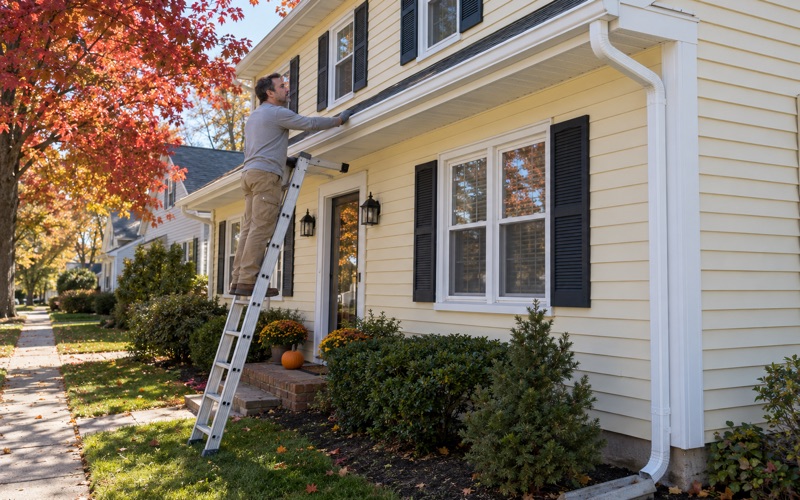
On a commercial building that usually means tracing a leak back through the deck and the insulation instead of patching the stain on the ceiling tile below. On a house it means a trip into the attic as well as onto the shingles, because water that shows up over a bedroom often entered several feet uphill. Either way, we tell you plainly whether the roof can be repaired before a replacement is ever on the table.
The rest of this page covers the low-slope systems we see on the Meadowlands side of town, when the state’s Meadowlands District zoning rules come into a roofing job, how we handle the two-family streets and how permits work at the borough office.
Low-Slope Roofs on the Meadowlands Side of the Borough
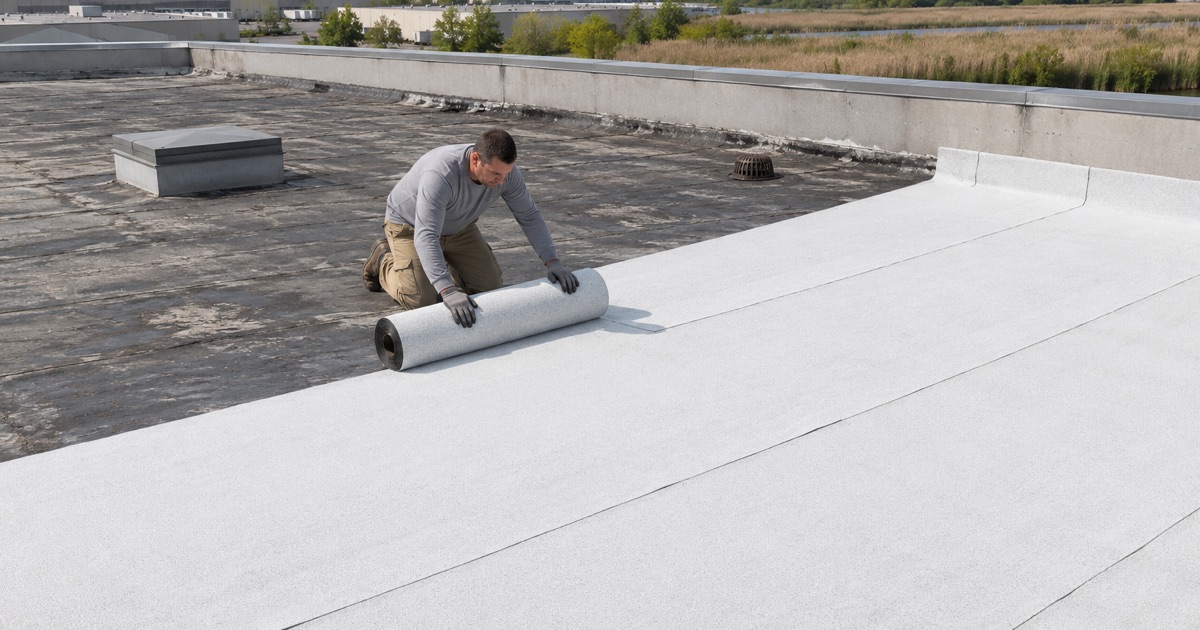
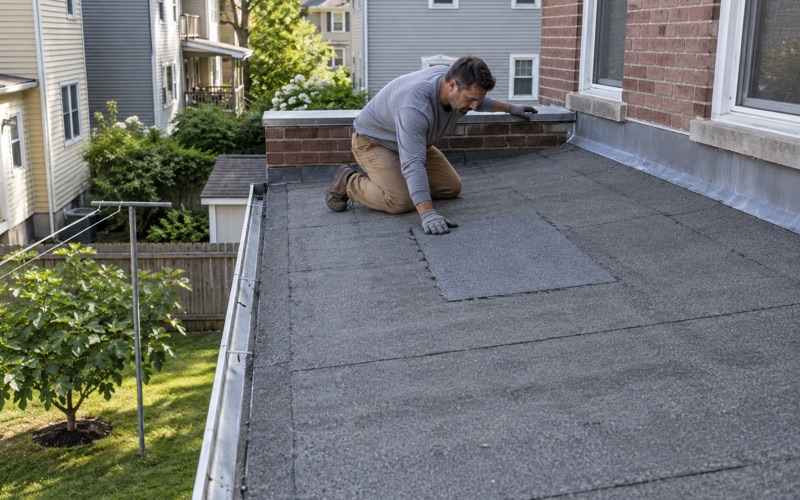
A roofer in East Rutherford is really working in two places. The eastern part of the borough holds the Meadowlands Sports Complex, the American Dream complex and long stretches of industrial and warehouse buildings. Those structures carry broad, nearly flat roofs, and the materials on them are membranes, modified bitumen and built-up systems rather than shingles.
Membrane roofs: EPDM, TPO and PVC
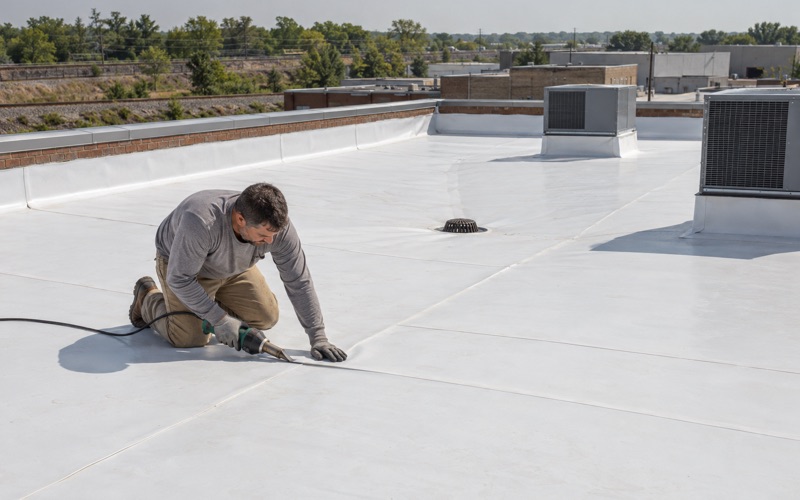
Single-ply membranes cover a large share of newer warehouse and retail space. EPDM rubber membrane is laid in wide sheets with glued or taped seams, while TPO and PVC single-ply membranes are heat-welded at the seams, which gives them a continuous, monolithic surface once the welds are sound. Most leaks we find on these roofs start at a seam, a penetration or a perimeter edge rather than in the open field of the sheet.
That shapes how we inspect. We probe welded seams, check the flashing around rooftop units, curbs and pipe penetrations, and look at how the membrane terminates at parapet walls and roof edges. A tired membrane with a handful of failed details can often be repaired and given years more service; one with widespread seam failure or wet insulation underneath is a candidate for replacement, and we say which one it is.
Modified bitumen and built-up systems
Older plants and distribution buildings often sit under SBS or APP modified bitumen, or under a traditional built-up roof of layered felts and asphalt with a gravel or coated surface. These systems are tough, but they age at the laps, at blistered areas and where flashing meets walls and curbs. Ponding water that sits for days after rain speeds that aging and is worth recording on any inspection.
When a built-up or modified roof does have to come off, we write the scope so each piece is visible: tear-off, deck repair, insulation, the new membrane and the flashing as separate lines. That lets a property manager compare two bids item by item instead of guessing what one contractor left out.
Older industrial roofs and what sits under them
The borough was an industrial town long before the stadium and the mall arrived, with more than 50 industrial firms operating here by 1940. Buildings from that era can carry roofing felts, mastics or flashing cements that need asbestos testing before a tear-off begins. That is a general rule for roofs of that age, not a finding about any particular property, and we build the testing step into the schedule rather than discovering the question on demolition day.
Looking for roofing closer to North Arlington? See Roofing Services in North Arlington.
When the Meadowlands District Zoning Certificate Comes Into It
East Rutherford is one of the 14 municipalities in the Hackensack Meadowlands District, and the District has its own land-use authority. Since a 2015 merger, that role belongs to the New Jersey Sports and Exposition Authority, known as NJSEA, through its Land Use Management office. NJSEA notices place parcels in this borough in District zones, including one that placed a property in the Light Industrial A zone.
What the rule actually says
Under N.J.A.C. 19:4-4.2(a)1, no construction, moving, remodeling or reconstruction of any structure may begin in the District until a zoning certificate is obtained. The same rule carves out an exception for building demolition and maintenance. A zoning certificate is a land-use approval, separate from a construction permit, and NJSEA does not issue roofing permits.
Whether a particular re-roof counts as maintenance under that rule has not been settled for every case, and we do not pretend otherwise. A like-for-like replacement plausibly sits on the maintenance side of the line, but the agency is the one that decides. NJSEA’s Zoning Officer of the Day is the person to ask.
Roof changes we check with NJSEA first
The projects that call for that conversation are the ones where the roof changes. Adding rooftop mechanical equipment, building new structure on the deck, raising a parapet or increasing the height of the building all fall into that category, because each one changes the structure rather than renewing what was already there.
When a District property owner brings us a project like that, we flag the question early and lay out what we know about the scope so the owner or their manager can raise it with NJSEA before the job is scheduled. It is far easier to answer a zoning question on paper than with a crane already on site.
Rooftop equipment and solar
Commercial roofs here often carry HVAC units, exhaust fans and, increasingly, solar arrays. We plan the removal and reinstallation of solar panels into the schedule up front, and we coordinate curb heights and flashing details for units that have to be lifted and reset. Where new equipment is being added rather than replaced, that is exactly the kind of change worth raising with NJSEA as well as the borough.
Pitched Roofs on the Two-Family Streets
The residential half of the borough, between the Passaic River on the west and the Meadowlands to the east, looks nothing like the industrial zones. A third of the homes here are in two-unit buildings, while only about one in six is a one-unit detached house, and most households rent. Neighborhoods such as Carlton Hill are full of the kind of two-family houses that need a different plan than a single-family ranch.
Scheduling around two households
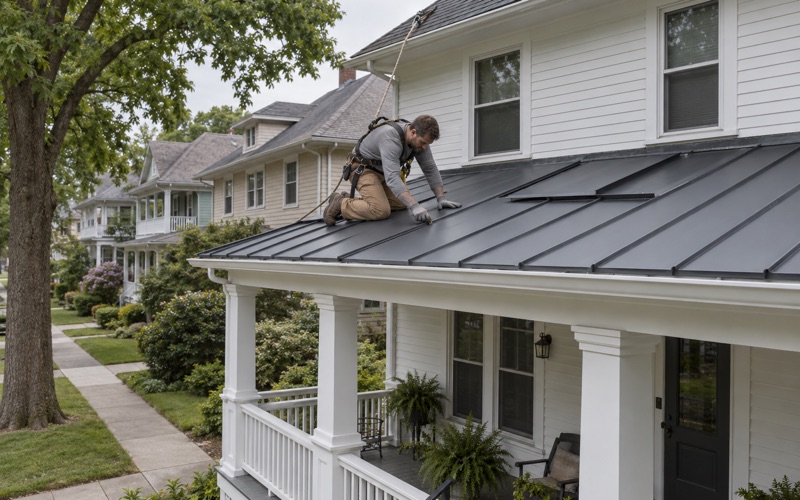
On a two-family house, the work affects two sets of people. We schedule with both floors in mind, so the tenant upstairs knows what day the crew arrives, when attic or porch access is needed and how long the noise will last. The owner gets one point of contact, and nobody finds a dumpster in the driveway without warning.
At the end of every work day, the yard, driveway and gutters are cleaned, and we run a magnet over the lawn and walks to pick up roofing nails. That matters more on a narrow lot where children, tenants and parked cars share a small space.
Older housing stock and what it hides
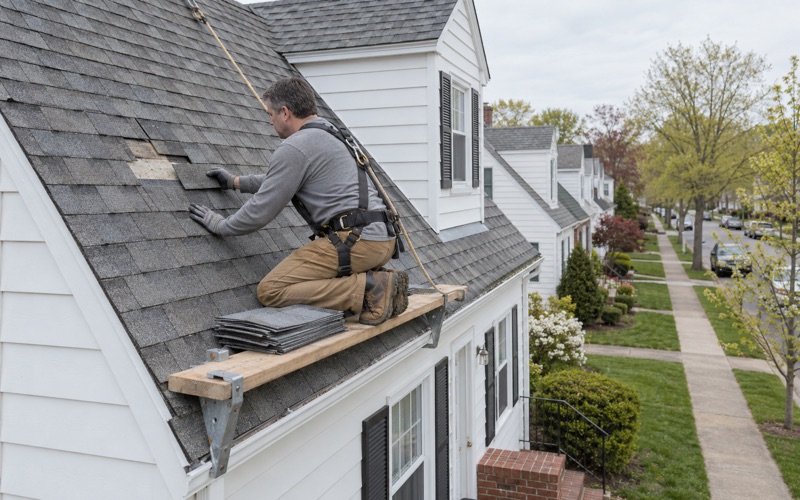
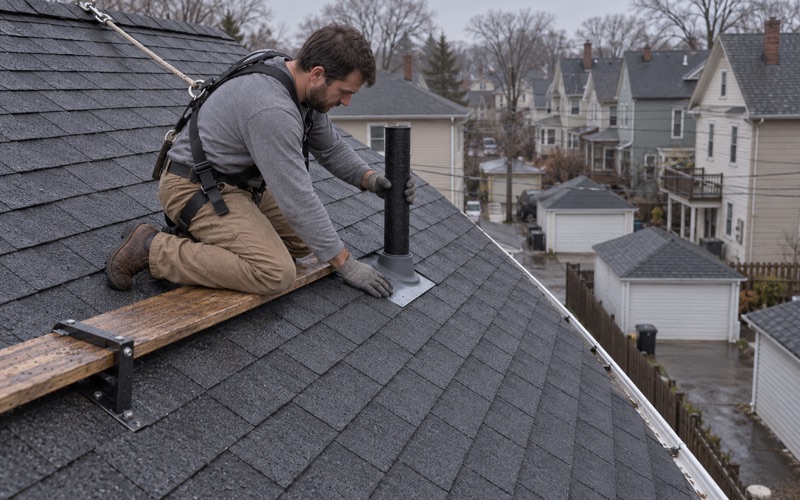
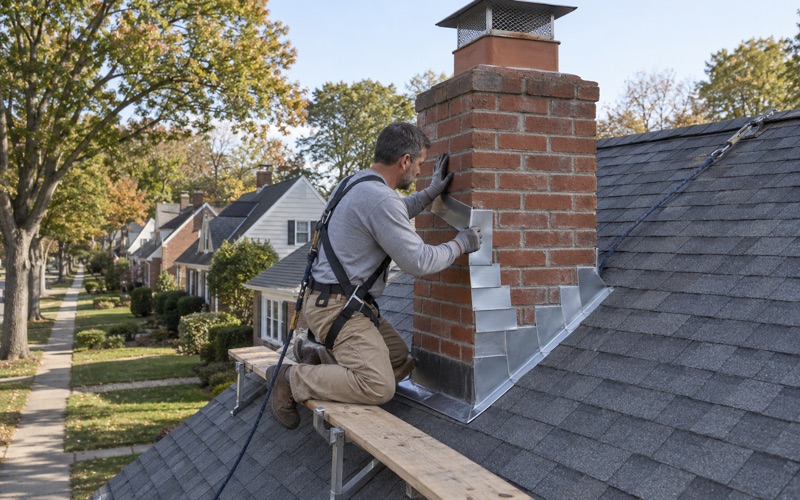
More than a fifth of the borough’s homes were built in 1939 or earlier, and a large share date from the 1950s and 1960s. On those houses we often find more than one layer of shingles, worn step and counter flashing around chimneys and dormers, and painted trim that falls under the EPA RRP lead-safe rule for pre-1978 homes. We replace step, counter and chimney flashing with the new roof rather than reusing it, and we add a chimney cricket where water has been backing up behind a wide chimney.
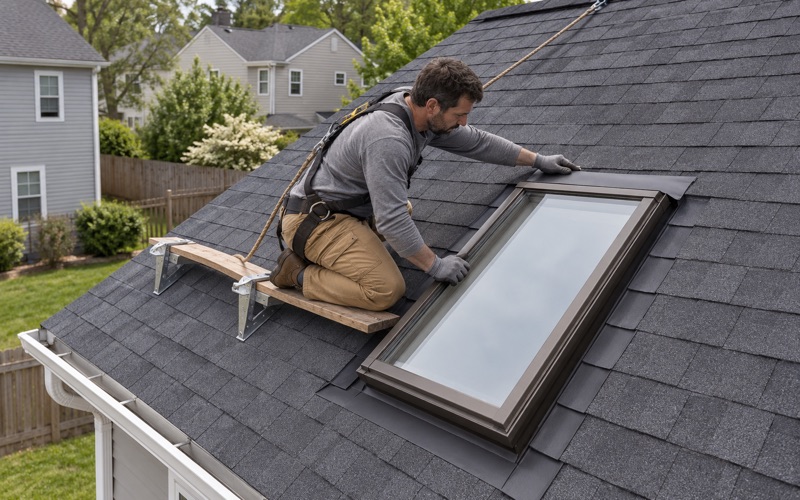
When the old roof comes off, any damaged decking is photographed and shown to the owner before it is replaced, at a per-sheet price already written into the contract. Ventilation gets the same attention: we check that soffit intake is balanced against ridge exhaust so the new shingles are not cooking from below.
Overlay or tear-off
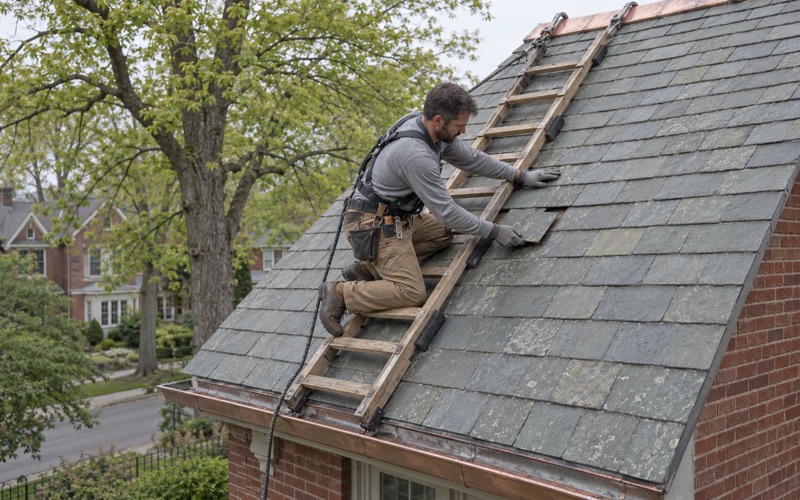
New Jersey’s rehabilitation subcode, N.J.A.C. 5:23-6, requires a tear-off rather than an overlay when a roof already carries two or more layers, or when it is slate, wood shake or tile. If that applies to your house, we explain the reason before the estimate, so the price does not come as a surprise. Where a single asphalt layer is in decent shape, we discuss whether an overlay or a full replacement makes more sense for how long you plan to own the building.
Permits and Paperwork at 312 Grove Street
The Borough of East Rutherford Building Department is the local enforcing agency under the state’s Uniform Construction Code. Its Construction Official and Building Subcode Official is Keith Matino, and the office sits at 312 Grove Street, open Monday through Friday from 9 a.m. to 4 p.m. The borough’s page links its 2026 zoning ordinance and zoning map, but it does not post a permit fee schedule or an online permit portal.
Where permits apply and where they do not
State rules treat roof covering work on detached one- and two-family dwellings as ordinary maintenance under N.J.A.C. 5:23-2.7, which is why many residential re-roofs here move quickly. Commercial and industrial roofs, larger residential buildings and projects that change structure are a different matter, and the construction office is where those questions are answered. Because the borough’s forms page lists no construction permit packet of its own, we work from the state UCC forms.
For a property inside the Meadowlands District, the borough permit and any NJSEA zoning certificate are two separate approvals from two separate agencies. One does not stand in for the other, and we keep both in view when we plan the job.
Contracts written to New Jersey’s rules
Every residential contract we write follows the state’s home improvement rules, including the three-business-day cancellation right on contracts over $500 under N.J.S.A. 56:8-151. The scope lists tear-off, decking, underlayment, flashing and ventilation as separate items, so you can see exactly what you are paying for. If a qualifying capital improvement is involved, we can talk through Form ST-8, the Certificate of Exempt Capital Improvement.
After a storm
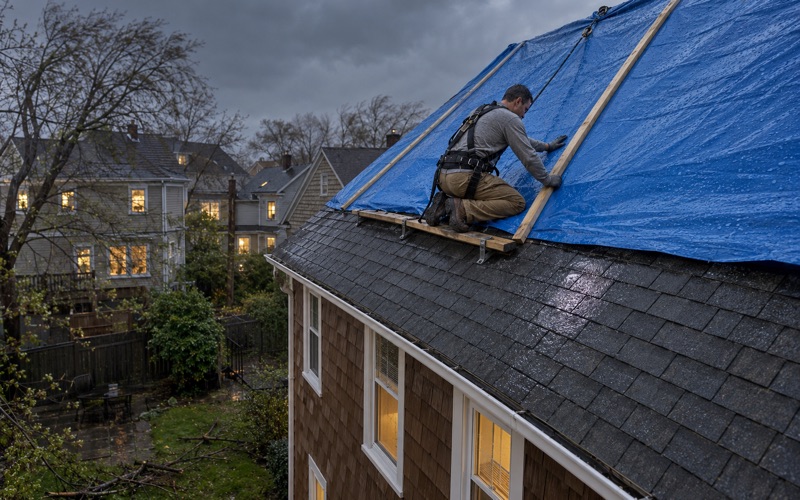
When wind or a fallen limb damages a roof, we photograph the damage and write it up so you have a clear record for your own insurance claim. If you ask, our crew will meet the adjuster on site to walk the roof and point out what we found. The claim itself stays yours, and the write-up gives you the facts to work from.
Whether you manage a low-slope roof on a Meadowlands warehouse or own a two-family house near Carlton Hill, we start the same way: a look at the roof and what lies beneath it, and a straight answer about what it needs. Call Clifton Elite Roofing to set up an inspection in East Rutherford.
- 20+ Years on North Jersey Roofs
- Itemized Written Scopes
- Attic-to-Ridge Leak Tracing