Clifton Elite Roofing handles emergency roof repair in Clifton, NJ, serving surrounding cities including Woodland Park, Wallington, Wood-Ridge, Rutherford and Totowa. When a windstorm strips shingles, a limb punches through the deck, or a sudden leak starts pouring through a ceiling, our first job is to stop more water from getting into the house, and our second is to record what happened before anything is moved.
In more than 20 years of storm calls, we have found that the temporary repair matters almost as much as the permanent one. A tarp that is nailed through its face, left flapping at the edges or laid without regard for how water runs off the roof can make the damage worse. We secure emergency coverings the way we would want them on our own houses.
Every emergency job is photographed before, during and after, and written up so you have a clear record for your insurer. Once the house is protected, the permanent repair or replacement is planned with the same itemized scope as any other job.
What We Do on an Emergency Roof Call
Emergency Roof Tarping
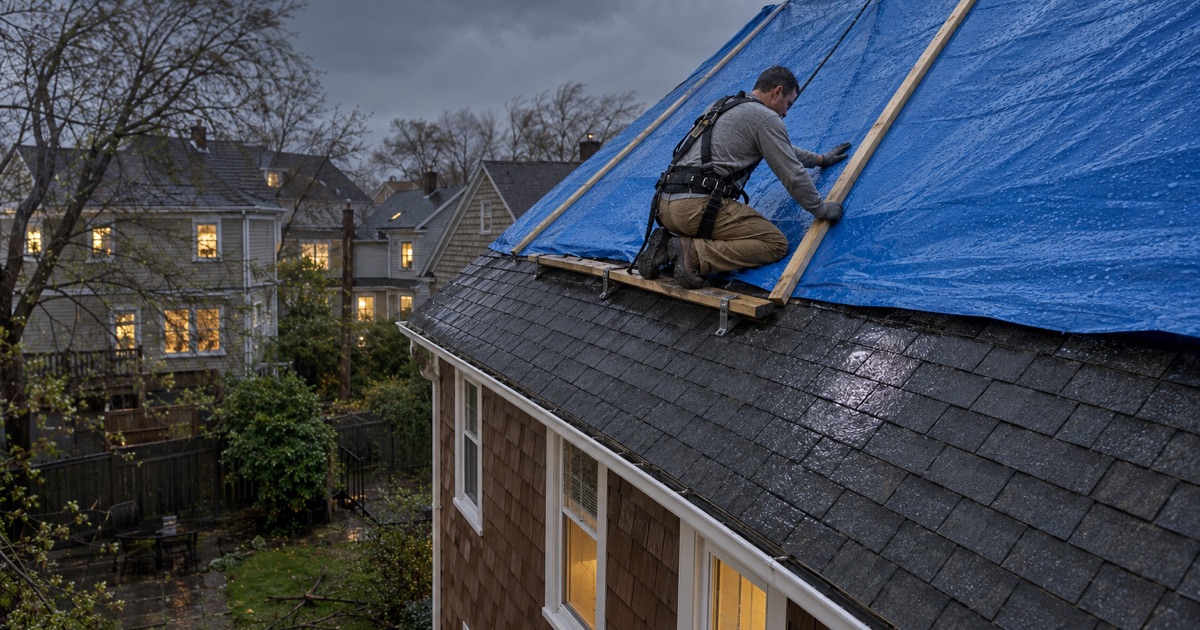
A proper tarp extends past the damage and over the ridge where possible, so water cannot run underneath it from above. We fasten it with wood battens screwed or nailed through the batten rather than through bare tarp, which spreads the load and keeps wind from tearing it loose.
On steep, slate or very large roofs, we adapt the method so the covering does not crack sound material around the damage. The goal is a temporary cover that stays put through the next storm without creating a second repair.
Stopping Active Leaks
Not every emergency involves a hole. A flashing that has torn loose, a pipe boot that has split, or a valley that has overflowed with ice can all pour water into a house. We find the entry point from the attic and the roof, then make a temporary seal or patch that holds until the permanent repair can be done properly.
Securing Storm-Damaged Shingles
After high winds, loose and creased shingles that are still attached can let rain in and blow off in the next gust. Where weather allows, we reattach and hand-seal lifted shingles, replace missing ones, and cover exposed underlayment, so a partly damaged roof does not become a fully damaged one.
Tree and Limb Damage
When a limb comes through a roof, it can crack rafters and decking as well as shingles. Once a tree service has removed the weight, we inspect the framing from inside the attic, brace or cover the opening, and plan the structural repair, which in New Jersey is not ordinary maintenance and goes through the local construction office.
Protecting the House and Your Claim
Photographs and Written Documentation
Insurers ask for evidence of the damage and of the steps taken to prevent further loss. We photograph the roof and the attic before any temporary work, record what we did and why, and give you an invoice for the emergency service, so your claim file starts out complete.
The written report separates sudden storm damage, such as torn shingles and impact marks, from older wear that an insurer is unlikely to cover. Knowing the difference early helps you set realistic expectations before the adjuster arrives.
Working With the Adjuster
New Jersey’s Department of Banking and Insurance notes in its storm guidance that it can help to have your contractor speak directly with the claim adjuster. We will meet the adjuster on the roof when you ask and point out what we found, while the claim itself and any negotiation remain yours or a licensed public adjuster’s.
Keeping Receipts and Interior Records
Along with our paperwork, keep receipts for anything you spend to protect the house, such as fans, dehumidifiers or a hotel night if rooms are unusable. Photograph wet ceilings, walls, floors and belongings before cleanup, since interior damage is often a larger part of the claim than the roof itself.
Emergency Work Under Local Rules
Clifton’s Construction Hours and the Emergency Exception
Clifton limits construction noise in or next to residential zones to 8:00 a.m. to 7:00 p.m. on weekdays and Saturdays, and on Sundays allows only work done personally by the homeowner. Emergencies are excepted, which is why securing a storm-opened roof can happen when a planned roof replacement cannot.
Two-Family Houses and Tenants
On a two-family house, a roof leak usually hits the top-floor unit first, and the tenant is often the person who notices. We coordinate with the owner for access to the upstairs unit and the attic, keep the tenant informed, and document interior damage in both units if water has traveled down.
Flat Roofs and Commercial Buildings
Flat roofs on rear additions, porches and commercial buildings can fail suddenly when a drain clogs, a seam opens or rooftop equipment is blown loose. We clear drains, patch membranes with compatible materials, and secure loose curbs and flashing so water stops entering the building while a permanent repair is planned.
After the Emergency
Planning the Permanent Repair
Once the house is dry and the insurer has inspected, we return to assess the full extent of the damage, including decking, flashing and any hidden problems the storm exposed. You get a straight answer on whether a repair will restore the roof or whether replacement is the more sensible step.
When the Storm Reveals an Older Problem
Sometimes a storm leak exposes a roof that was already near the end of its life, with brittle shingles or rotted decking that the wind only finished off. We show you the evidence and separate it from the storm damage, so decisions about repair, replacement and the claim are made with the facts in front of you.
- 20+ Years on North Jersey Roofs
- Itemized Written Scopes
- Attic-to-Ridge Leak Tracing