
Clifton Elite Roofing handles gutter installation in Clifton, NJ, serving surrounding cities including Woodland Park, Wallington, Wood-Ridge, Rutherford and Totowa. In more than 20 years of roofing work, we have seen how many roof, fascia and foundation problems trace back to gutters that were the wrong size, hung at the wrong height, or pitched toward the wrong corner.
We install seamless aluminum gutters and leaders formed on site to the exact length of each run, so the only joints are at corners and outlets. Each system is sized to the roof area draining into it, pitched toward the leaders, and fastened through sound fascia into the framing behind it.
Because we are roofers first, we look at the roof edge as well as the gutter. Drip edge, the fascia board and the way the bottom course of shingles overhangs all decide whether water ends up in the trough or behind it, and we correct those details as part of the job rather than hanging a new gutter on an old problem.
Seamless Gutter Systems for Houses
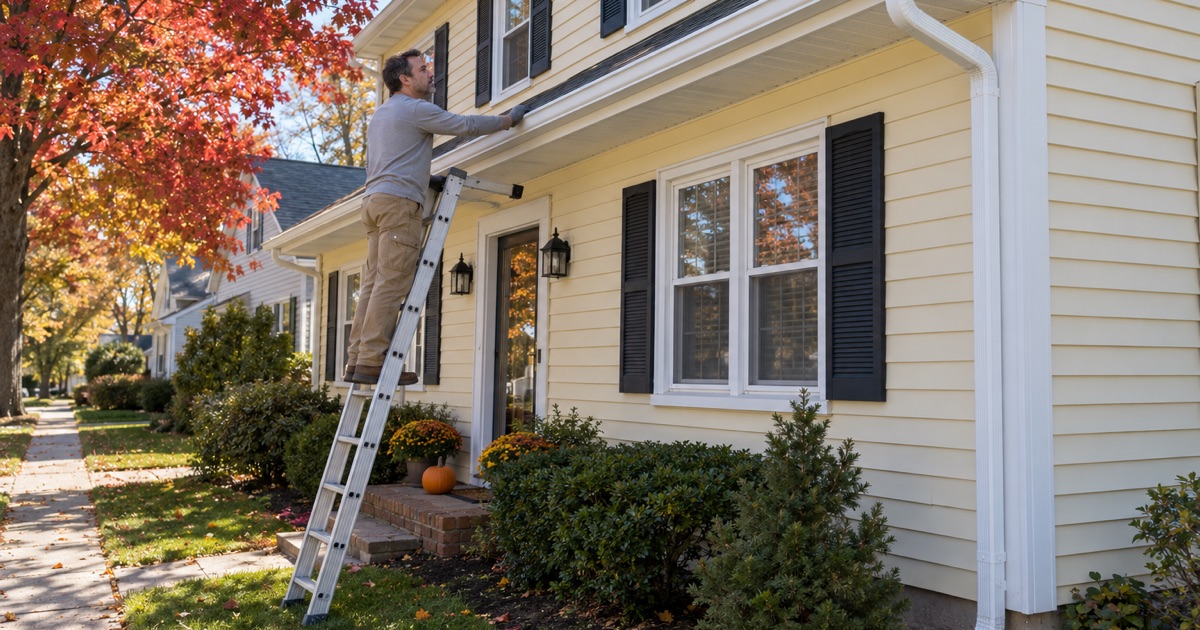
Seamless Aluminum K-Style Gutters
K-style gutters have a flat back and a decorative front profile that resembles crown molding, and they are the standard on most houses in this area. We roll them from coil on site so each run is one continuous piece, then fit corners, end caps and outlets with sealed, riveted joints.
Aluminum gutters do not rust, come in a wide range of factory-baked colors to match trim and siding, and hold up well for the cost. We use heavier-gauge material and hidden hangers spaced closely enough to carry wet leaves, snow and ice without sagging.
Standard Versus Oversized Gutters
Most houses take a standard residential gutter, but a single size does not fit every roof. Steep, tall roof planes, long runs, and valleys that pour a whole slope into one corner can overwhelm a standard trough, so we size up to a wider gutter and larger leaders where the water volume calls for it.
Sizing correctly is cheaper than living with overflow. A gutter that spills over its front edge in every heavy rain sends water against the foundation and splashes mud onto siding, no matter how well it was hung.
Half-Round and Copper Gutters
On older and historic houses, half-round gutters in aluminum or copper often suit the architecture better than K-style. Copper weathers from bright metal to brown and eventually to green, and pairs naturally with copper flashing on slate roofs.
In towns with historic districts, some boroughs review gutters and leaders as part of a historic approval, so the profile and material may need to match the original. We discuss the options before ordering so the system fits both the house and any local requirement.
Getting Gutters to Work With the Roof
Drip Edge and the Roof Edge Detail
Drip edge is the metal strip at the eave that carries water off the shingles and into the gutter. Without it, water wicks back under the shingles and onto the fascia, then runs down behind the gutter. We add or replace drip edge where it is missing and make sure the gutter’s back edge sits under it.
The bottom course of shingles should overhang the drip edge by a consistent amount. Too little and water dribbles behind the gutter; too much and the edge droops. Getting this right is the difference between a gutter that drains and one that just collects stains.
Fascia Repair and Replacement
Gutters are only as solid as the fascia they hang on. Before installing, we check the fascia board for rot and soft spots, especially at corners and below old leaks, and replace damaged sections so the new hangers fasten into sound wood and framing.
On houses built before 1978, fascia and trim may carry old lead-based paint. Where we disturb painted trim on those houses, we follow EPA lead-safe work practices for containment and cleanup so paint chips and dust do not end up in the yard.
Pitch, Outlets and Leader Placement
A gutter has to slope toward its outlet so water does not sit and freeze in the trough. We snap a line for each run, set the pitch toward the leaders, and split long runs so they drain to both ends. Outlets are placed where water can be carried safely away from walkways, steps and driveways.
Leaders are fastened securely to the house and sized to the gutter. Where a leader from an upper roof would empty onto a lower porch or addition, we pipe it past the lower roof or onto a protected spot, so the lower shingles are not worn away by concentrated runoff.
Gutter Guards, Leaders and Drainage
Choosing a Gutter Guard
Gutter guards keep leaves, twigs and seeds out of the trough while letting water in. Screen and micro-mesh guards work under most deciduous trees, while some designs struggle with pine needles. We recommend a type based on the trees overhanging your roof and how hard the gutters are to reach for cleaning.
Guards reduce maintenance rather than eliminate it. A light check after fall leaf drop still keeps the system running, but on a two- or three-story house, cutting cleaning visits sharply is often worth the cost.
Leaders, Extensions and Splash Blocks
Water that leaves a leader next to the foundation ends up in the basement or under a slab. We extend leaders onto splash blocks, extensions or existing drain lines, and avoid discharging onto walkways and driveways where it can freeze into an ice sheet in winter.
Ice, Snow and Gutters in Winter
Gutters full of ice add weight to the eave and can pull hangers out of weak fascia. Ice dams form when attic heat melts snow that refreezes at the roof edge, and gutters are where that ice collects. We set hangers closely, fasten into framing, and look at attic ventilation and insulation when a house has a history of ice dams.
Gutters on Two-Family and Commercial Buildings
Two-Family Houses and Rear Additions
Many two-family houses in this area have a pitched front roof, a flat or low rear section, and a porch roof, each draining differently. We plan the gutters and leaders so each roof section drains to its own outlet rather than overloading one corner, and coordinate access with both floors.
Box Gutters, Scuppers and Commercial Drainage
Some older buildings have built-in box gutters lined with metal, and low-slope commercial roofs often drain through scuppers to collector heads and leaders. We reline or repair box gutters where they can be saved, and install scuppers, collector boxes and oversized leaders sized to the roof they serve.
Our Gutter Installation Process
Step 1: Measure the Roof and the Runoff
We measure every run and the roof planes draining into it, and note valleys and inside corners that concentrate water. We also check the fascia, drip edge and current leader locations, along with where water ends up today after a heavy rain.
Step 2: Repair the Roof Edge
Rotted fascia is replaced and missing drip edge is added before anything is hung. Any other roof-edge problem that would send water behind the new gutter, such as a short shingle overhang, is corrected first so the new system starts on a sound edge.
Step 3: Form and Hang Seamless Gutters
Gutters are rolled to length on site and pitched toward the outlets. They are fastened with hidden hangers into sound fascia and framing, and every corner, end cap and outlet is sealed and riveted.
Step 4: Leaders, Guards and Cleanup
Leaders, extensions and any guards are installed, and the system is tested with water where practical to confirm every run drains. The yard, driveway and beds are then cleaned of debris, coil scraps and loose fasteners.
- 20+ Years on North Jersey Roofs
- Itemized Written Scopes
- Attic-to-Ridge Leak Tracing