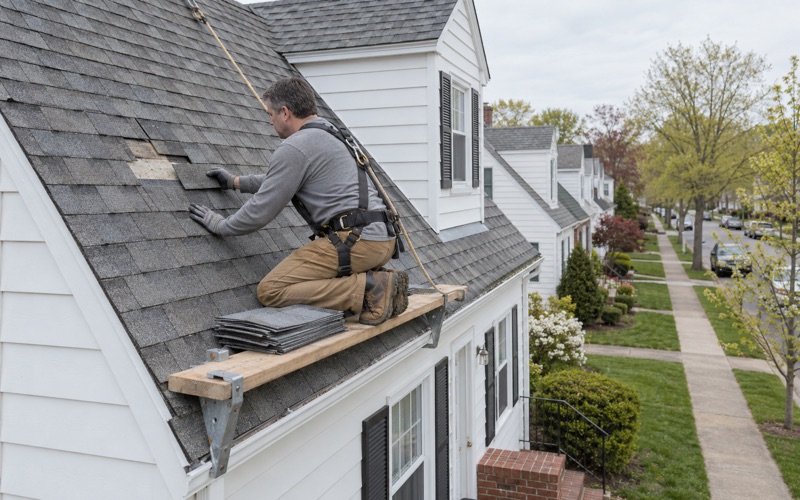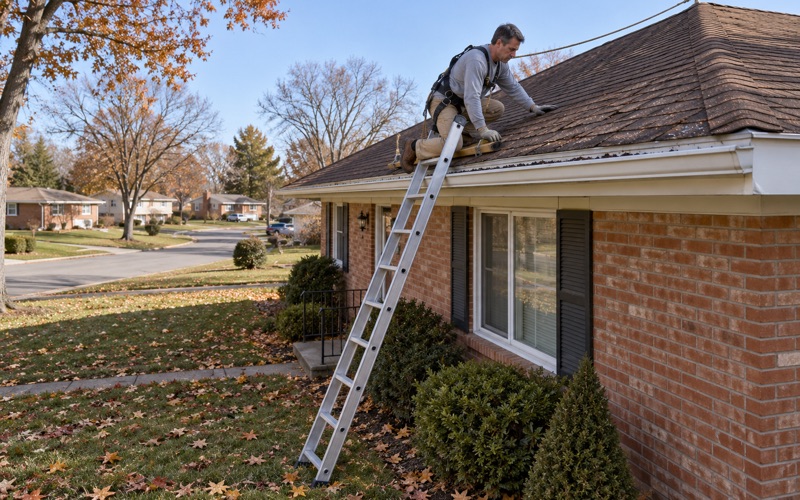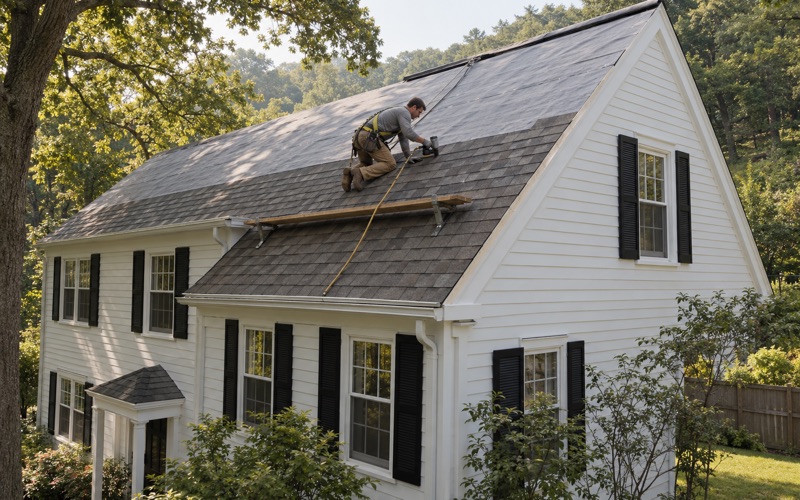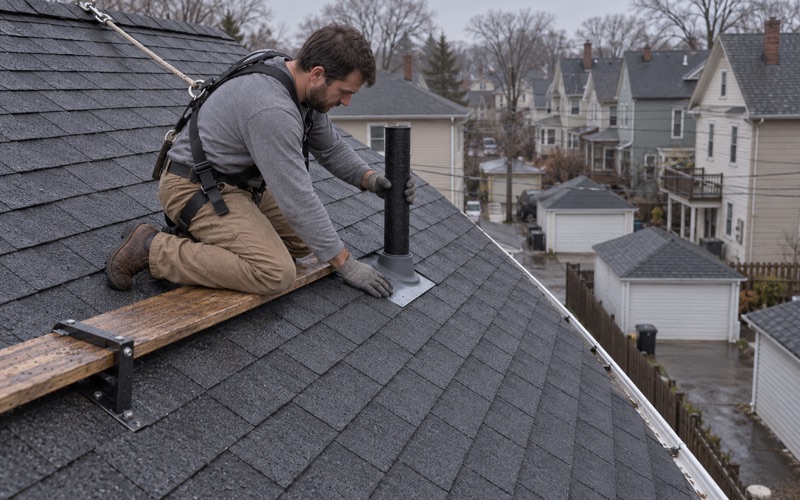
Clifton Elite Roofing brings more than 20 years of roofing in Maywood and across Bergen County to the job of keeping a roof sound and its paperwork clean. Most homeowners only think about the second part when a buyer or a new tenant is already waiting, and by then an open inspection is a delay nobody planned for.
Our first visit always starts with a plain answer about whether the roof can be repaired before anyone talks about replacing it. On a leak call we go into the attic as well as onto the roof, so the water is followed back to the spot where it actually enters before we price anything.
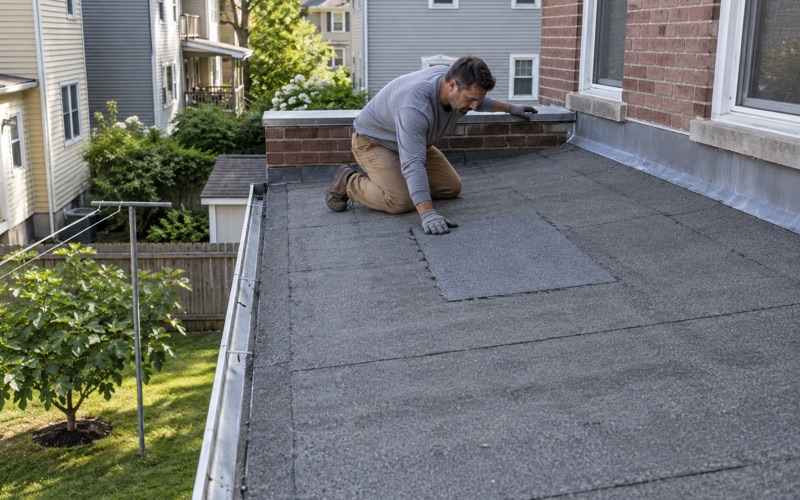
When a full replacement is the right call, the written scope breaks tear-off, decking, underlayment, flashing and ventilation into separate lines. That lets you lay our number beside any other estimate and compare the work item by item instead of guessing what a single total covers.
Why a Maywood Roof Job Can Surface at the Closing Table
When a house or apartment in Maywood is sold or rented, the borough issues a Continued Certificate of Occupancy, the CCO, only after an inspection. Item 7 on that checklist reads “Verify permits and FINAL inspections were made for any construction work,” and the form states plainly that a CCO will not be issued if any listed item is incomplete. A roof job that needed a permit and never had its final inspection signed off is exactly the kind of loose end that check is built to find.
Most re-roofs here are not permit work at all
New Jersey’s construction code treats the repair or replacement of existing roof covering on a detached one- or two-family dwelling as ordinary maintenance under N.J.A.C. 5:23-2.7. No permit application, inspection or notice to the construction official is required for it. That covers a shingle tear-off on most single-family houses in town, and the same section lists gutter and leader work as ordinary maintenance too.
So a straightforward new roof on a detached Cape or a two-family house does not leave an open permit behind, and it is not something the CCO inspector will flag for lacking one. We say that up front because sellers sometimes assume every roof needs a sign-off and lose a week chasing one that does not exist.
Where the permit question changes
The exemption stops at the edge of that definition. Work affecting structural or fire safety, or any job that removes or cuts a rafter, beam or bearing support, falls outside ordinary maintenance. Roofs on attached dwellings, buildings with three or more units and commercial buildings also go through the local construction office regardless of how simple the covering work looks.
In Maywood that line matters more than you might expect. The borough has a real stock of small rental buildings, and the census counts 421 homes in three- and four-unit structures, most of them rented. If one of those roofs was redone without its final inspection closed, the next lease can stall at the CCO stage.
Finding out before a buyer does
If you are planning a sale or a new lease and a past roof job involved sistered rafters, new decking over a structural repair, or a multi-unit building, it is worth checking the permit record well before the inspection is booked. We can look at the roof and tell you what kind of work it appears to have been, which narrows the conversation you need to have with the Building Department.
Looking for roofing closer to Little Ferry? See Roofing in Little Ferry.
Final Inspections and the Afternoon Window at 15 Park Avenue
Maywood’s Building Department works out of Borough Hall at 15 Park Avenue, with Gary Goodman serving as Construction Official and Building Inspector. Permit applications go through the borough’s online portal along with the permit jacket and subcode technical sheets, and inspections are requested by email rather than at the counter.
Tuesday and Thursday, 3:00 p.m. to 6:00 p.m.
Building inspections in Maywood run only on Tuesday and Thursday afternoons, from 3:00 p.m. to 6:00 p.m. Borough Hall is open Monday through Thursday from 8:30 a.m. to 6:00 p.m. and closed on Fridays, so a request sent late in the week waits for the following Tuesday at the earliest.
On permit work, we plan the roof around that window instead of treating the inspection as an afterthought. Structural repairs need to be visible and complete when the inspector arrives, which means sequencing the decking, the framing fix and the dry-in so the work can be seen before it is covered.
Why the final matters more than the first visit
A rough inspection that passes is not the end of the record. The CCO checklist asks for final inspections specifically, and a permit left open after the roof looks finished is still open on paper. If a buyer’s closing date is set, a missed Thursday slot can push the whole calendar back several days.
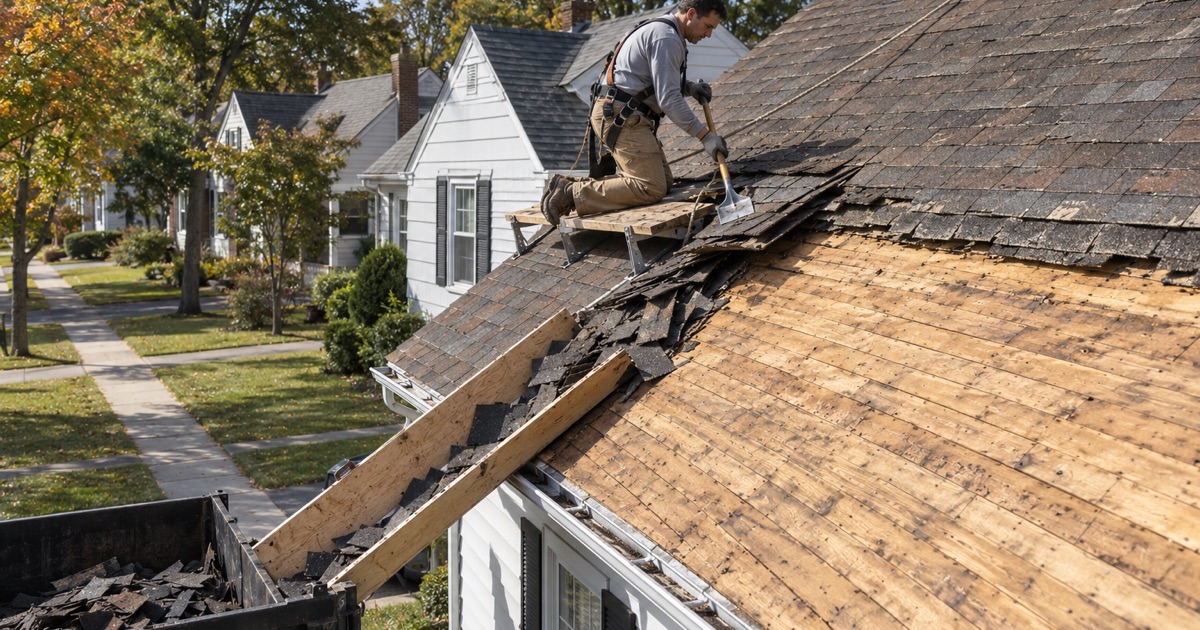
That is why our closing walk-through on any permit job includes a simple question for the owner: has the final been requested and passed? We would rather raise it while the dumpster is still in the driveway than have it surface at the closing table.
Chimney bases and the same checklist
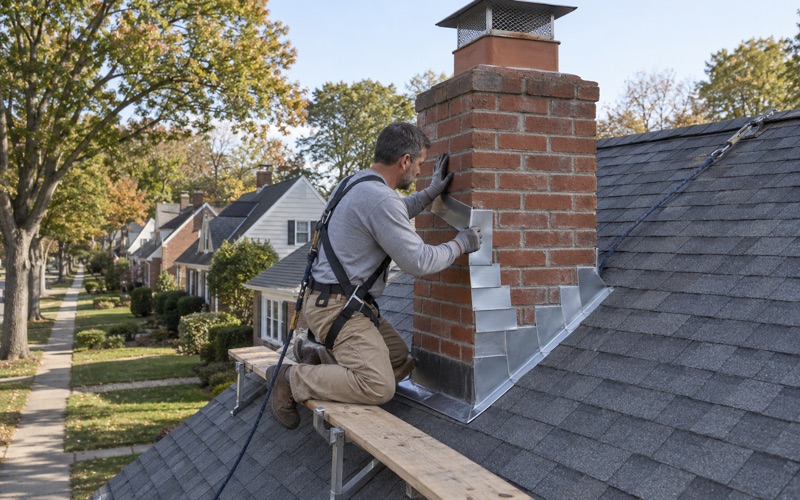
The CCO form also looks at the chimney base, asking that it be sealed around smoke pipes. That is inside the house, but on the roof side of the same chimney, step flashing, counter flashing and the cricket behind a wide stack are where a lot of Maywood leaks begin. We replace chimney and step flashing with the new roof rather than bending old metal back over fresh shingles, so the outside of the chimney is not the weak point when the inside is being inspected.
Roofs on Maywood’s 1940s and 1950s Houses
Maywood is an older housing town. Of its 3,969 homes, 71.2% were built before 1960, and more than a quarter date to 1939 or earlier. Detached houses make up most of the stock, along with a good number of two-family homes, and very little has been added since 2010.
Capes, small colonials and low attics
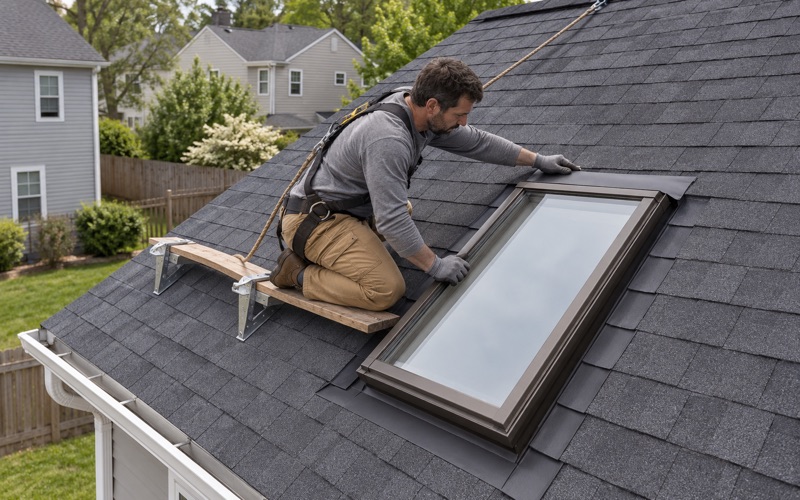
The postwar Capes and compact houses built in the 1940s and 1950s tend to have short rafter runs, dormers and tight attic spaces with little room for air to move. On every replacement we check ventilation, balancing intake at the soffit against exhaust at a ridge vent so the net free area works for the attic rather than against it. On a Cape with knee walls, getting that balance right often does more for winter ice and summer heat than the shingle choice does.
Older decking is the other common find. Once the old roof is off, any damaged sheathing is photographed and shown to you before it is replaced, at a per-sheet price already written into the contract, so the board count is never a surprise on the final invoice.
Two-family houses and the tenant upstairs
A two-family house is a different job when someone lives on each floor. We schedule with both units in mind, so the upstairs tenant knows what day the crew arrives, when the attic or a rear porch needs to be reachable, and when the noise will stop. On a rental, that coordination also keeps the work from colliding with a lease change and a CCO inspection in the same week.
Slate, older layers and the overlay question
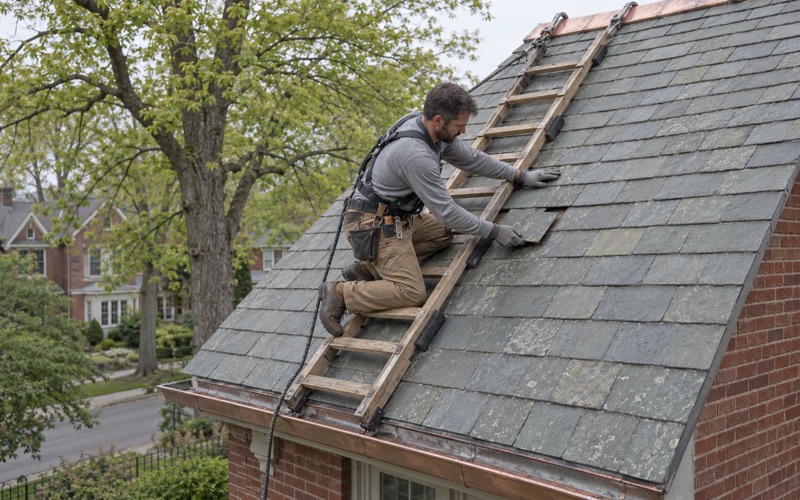
A few of the prewar houses still carry slate, and sound old slate does not need to come off by default. We repair it with matching slate, copper nails and slate hooks, which keeps a roof that may have decades left in it working. Where a second layer of shingles is being considered, we explain before the estimate why an overlay is off the table if the roof already has two layers or has slate or tile underneath, so the price you see reflects the job that can actually be done.
Painted trim and fascia on houses built before 1978 also fall under the EPA lead-safe rule when they are disturbed, which is part of planning a re-roof on a house this age.
Dumpsters, Debris and Leaving the Lot Clean
A full tear-off generates more material than any curbside pickup will accept, and Maywood is specific about how that debris leaves town. The borough hauler will not take building or construction materials at the curb, so old shingles, underlayment and flashing have to go out in a permitted container.
The borough dumpster permit
A dumpster or POD needs a Dumpster Permit from the borough under Ordinance 12-12-B(12)e. The fee is 25 dollars when the container sits on the property being worked on and 50 dollars when it sits on borough property, such as the street. On most Maywood lots the driveway is the better spot, both for the lower fee and for keeping the road clear for neighbors.
Private dumpster pickups are limited to Monday through Friday between 7:00 a.m. and 6:00 p.m. We set the drop-off and haul-away inside those hours so a full container is not sitting over a weekend waiting for a swap.
Cleanup at the end of every day
Roofing debris has a way of finding gardens and tires. At the end of each work day the crew clears the yard, the driveway and the gutters and runs a magnet sweep for loose roofing nails, not just on the last afternoon of the job. On a narrow lot with a shared driveway, that daily cleanup is what keeps the house next door on good terms with you.
Contracts, storm damage and the paperwork you keep
Our contracts follow New Jersey’s home improvement rules, including the three-business-day cancellation notice on contracts over 500 dollars. If wind or hail has damaged the roof, we photograph and write up what we find for your own claim, and the crew will meet your insurance adjuster on site when you ask. Those photos, the itemized scope and any permit record together make a tidy file to hand a buyer’s attorney when the house eventually changes hands.
If solar panels sit on the roof, their removal and reinstall go into the schedule from the start rather than being discovered the morning the crew arrives. The railroad came through in 1871 with a station named Maywood, and many houses in town have outlasted several roofs since. Planning the next one with the paperwork in mind keeps it an easy part of the house’s history.
- 20+ Years on North Jersey Roofs
- Itemized Written Scopes
- Attic-to-Ridge Leak Tracing