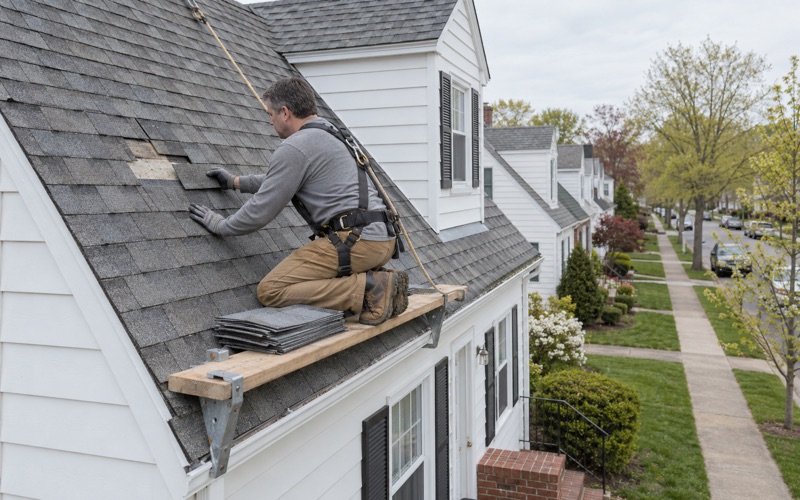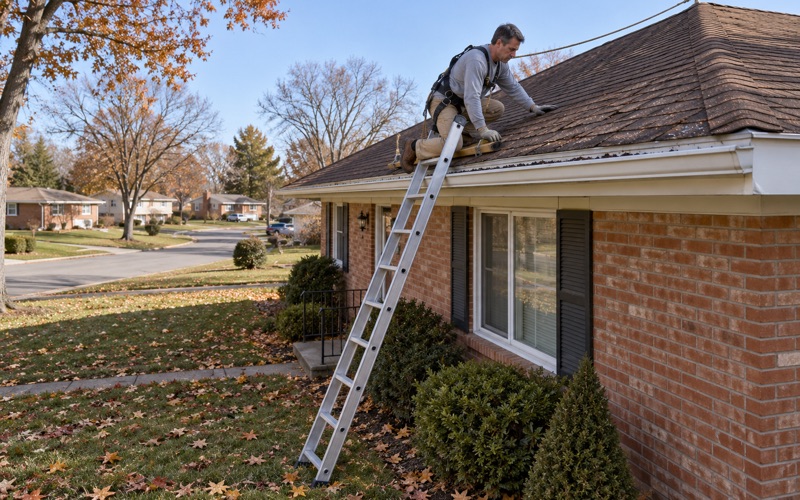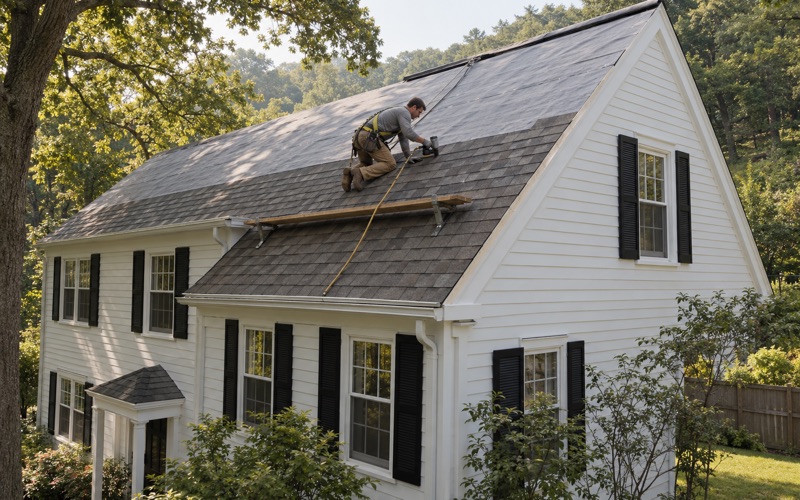
Clifton Elite Roofing brings more than 20 years of work to roofing in New Milford, and a good share of the calls we take here come from people who do not sleep under the roof in question. An owner gets a text from a tenant about a stain on the bedroom ceiling, and from that moment the job is as much about coordination as it is about shingles. We plan for that from the first phone call.
Our approach is simple to describe. We look at the roof and in the attic before we price anything, we tell you plainly whether a repair will hold or whether replacement is the honest answer, and we put the scope in writing with each part of the work on its own line. When the building is a rental, we also work out who needs to know we are coming and which door we will be using.
That combination matters for owners who manage from a distance. You get a clear record of what was found and what was done, and the people living in the building get a schedule they can plan around rather than a crew appearing at the door unannounced.
Small Rental Buildings and the Owners Who Live Elsewhere
Where the three- and four-unit buildings sit
New Milford is mostly a town of detached houses, but one home in five is in a three- or four-unit building. Census figures count 1,324 of the borough’s 6,376 housing units in buildings of that size, and 1,313 of those units are rented, against only 11 lived in by an owner. In practice that means nearly every small multiplex in town is a rental, and its owner usually lives somewhere else.
Those buildings sit among streets of houses built mostly in the 1940s and 1950s, when the borough added more housing than in any other period. Many of those roofs are now on a second or later covering, so the multiplexes and the postwar Capes and ranches around them often reach the same point at roughly the same time. The difference is who calls us and what happens after.
Why a multiplex re-roof is handled differently
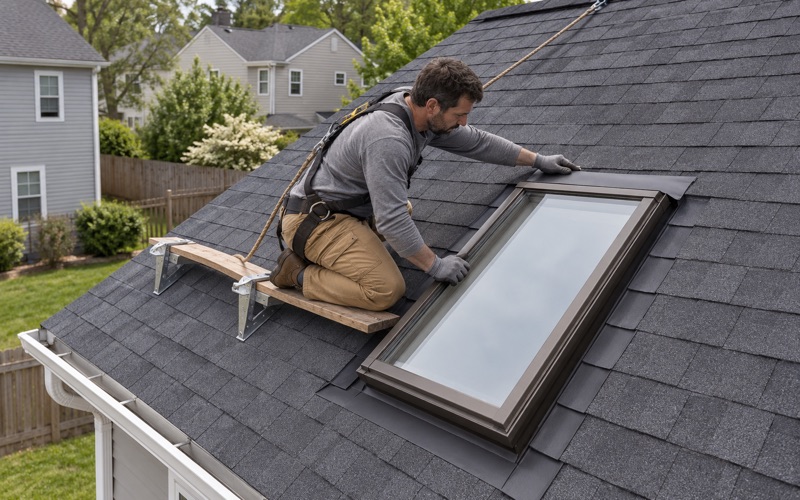
New Jersey treats replacing the roof covering on a detached one- or two-family house as ordinary maintenance, with no permit, inspection or notice for it. A three- or four-unit building falls outside that exemption. A re-roof on one goes through the New Milford Building Department as a permit or minor-work filing, and the inspection is booked by phone at least 24 hours ahead with the permit number.
We build that step into the schedule from the start instead of treating it as an afterthought. The borough’s own permit page invites a call to the department when anyone is in doubt, and for a mixed-use or unusual building that call is worth making before a start date is promised to tenants.
What changes when the owner is not on site
An owner who lives in the building notices a drip the night it starts. An absentee owner hears about it secondhand, sometimes days later, and often after the tenant has already moved furniture and set out a bucket. By the time we are called, the question is not only where the water gets in but how long it has been getting in.
We account for that lag when we inspect. Wet insulation, darkened sheathing and staining that has spread along a rafter tell us more about duration than a fresh spot on a ceiling does, and we report what we see so the owner is not relying on a tenant’s guess about when it began.
Looking for roofing closer to Guttenberg? See Guttenberg Roofing.
Leaks Reported From the Top Floor
The call usually comes through the tenant
In a three- or four-unit building, the top-floor apartment is where a roof leak shows up first. The tenant there is the person who sees the stain, hears the drip and takes the first photo, so the information reaching the owner is filtered through someone who is not a roofer and does not have access to the attic or the roof.
We ask owners to pass along whatever the tenant has noticed, including which room, what kind of weather it follows and whether it comes and goes. Those details shape where we start looking. A leak that only appears in wind-driven rain points somewhere different from one that shows up after every storm.
Tracing the water before anything is priced
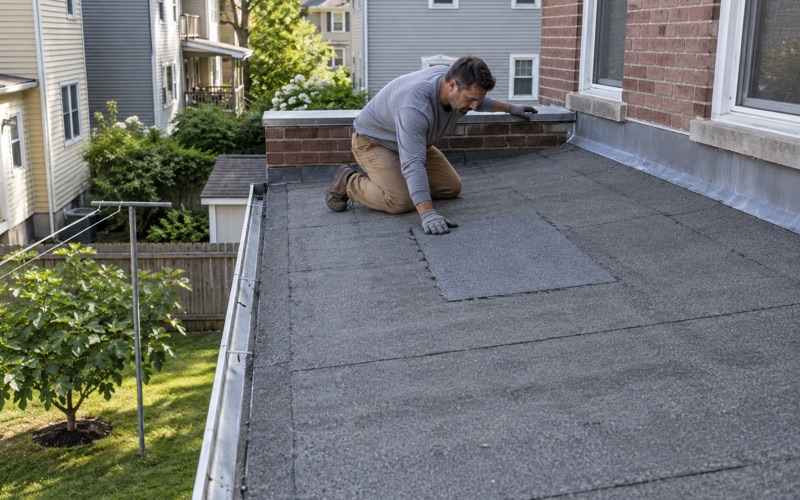
Every leak call includes a look in the attic as well as on the roof. Water rarely enters directly above the stain it makes; it runs along decking, rafters and pipes before it drips, so a repair aimed at the ceiling spot alone often misses. We follow it back to where it actually gets in, and only then do we talk about cost.
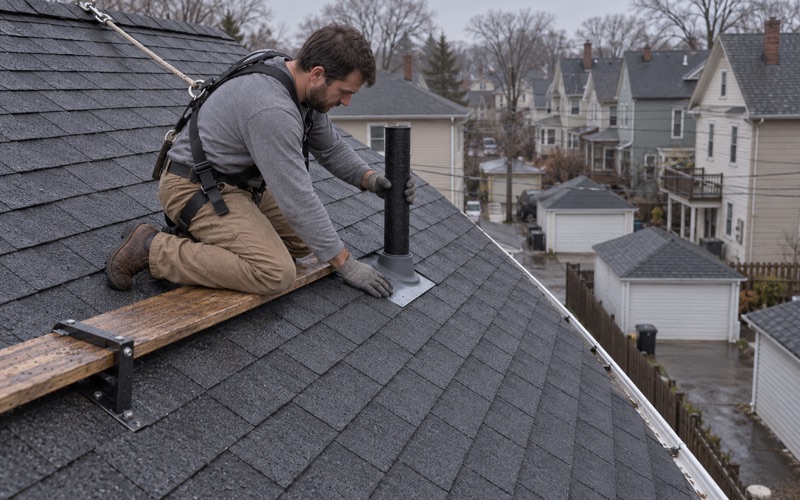
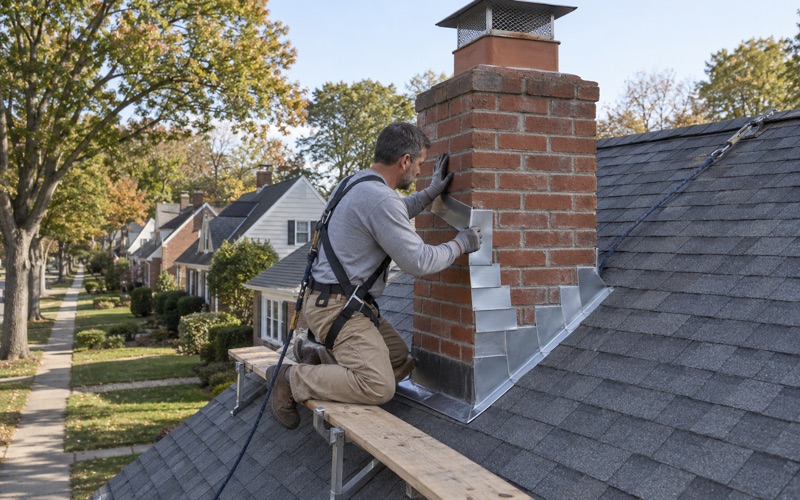
On older roofs in this borough the usual suspects are flashing at chimneys and walls, worn pipe boots and valleys that have been patched more than once. On a multiplex there may also be several vent stacks, one per unit, each with its own boot. Finding the right one saves the owner from paying for work on the wrong part of the roof.
A straight answer on repair versus replacement
We give an honest answer on whether the roof can be repaired before replacement is ever raised. For a rental owner weighing a building’s budget, that answer is the most useful thing we provide. A sound roof with a single failed flashing does not need to come off, and we will say so.
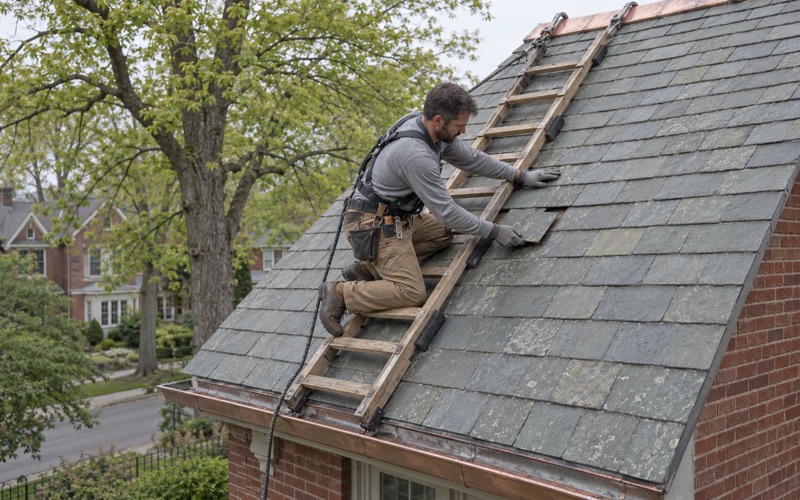
When the roof is past repair, we explain why in terms the owner can check. If an overlay is not allowed because the roof already carries two layers, or because slate or tile sits underneath, we say that before the estimate rather than after it.
Notice, Access and Scheduling Around Tenants
Telling the households in the building
The people living in a rental did not choose the contractor, and a roof replacement is loud. We schedule with every floor in mind, so tenants know which days the crew will be working, what hours to expect and when access to a hallway, attic hatch or yard will be needed. The owner decides how that notice is delivered; we supply the dates and details to put in it.
We do not give advice on what a landlord owes a tenant or when. That is a question for the owner and their own advisers. Our part is a dependable schedule the owner can share and a crew that keeps to it.
Access through someone’s home
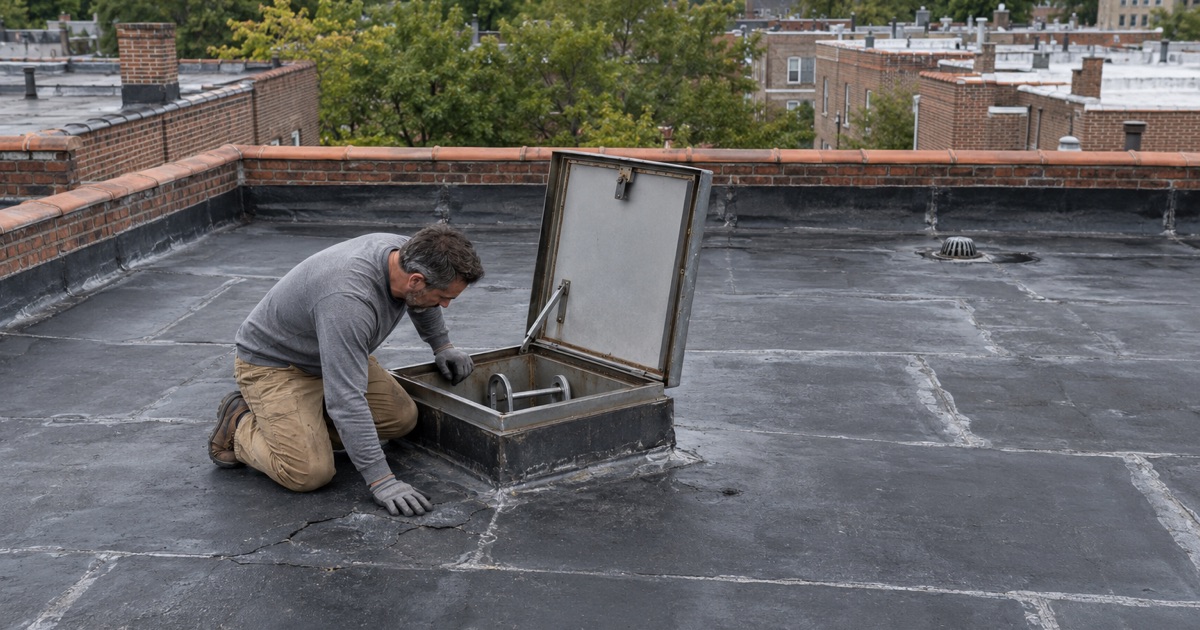
In many small multiplexes the only way into the attic is through the top-floor apartment. That means a crew member standing in a stranger’s closet or hallway, and we treat it that way. We confirm the access time with the owner in advance, keep the visit short, protect the floor beneath the hatch and leave the space as we found it.
Where a building has a shared stair, an exterior hatch or a basement route to the gutters, we plan around those first to keep traffic out of private rooms. If the roof carries solar panels, the removal and reinstall are written into the schedule from the start rather than discovered on the day, which keeps the disruption to one planned window.
Keeping the property usable every day
Tenants still need to park, take out trash and walk to the door while the work is underway. At the end of each work day we clean the yard, driveway and gutters, and we run a magnet sweep for roofing nails so no one’s tire or child finds one the next morning.
The same care applies to the detached houses next door. On streets where a rental multiplex sits beside owner-occupied 1940s and 1950s houses, a tidy site at day’s end keeps neighbors from becoming a second set of complaints for the owner to answer.
Roof Records an Owner Can Keep for a Rental Building
An itemized written scope
Our written scopes list tear-off, decking, underlayment, flashing and ventilation as separate lines. For an owner comparing two or three estimates, that makes the bids readable side by side, and it leaves a document that shows exactly what was put on the building and when. That record is useful when the property is refinanced, sold or handed to a new manager.
Contracts are written to New Jersey’s home improvement rules, including the three-day cancellation notice. An owner signing from out of town has the same time to reconsider as one signing at the kitchen table.
Photos of what was found under the old roof
Damaged decking does not show until the old roof is off. When we find it, we photograph it and show the owner before it is replaced, at a per-sheet price already set in the contract. For an absentee owner, those photos are the next best thing to standing on the roof, and they keep the final bill tied to what was actually there.
We also replace step, counter and chimney flashing with the new roof rather than reusing it under fresh shingles, and we check ventilation on every replacement, balancing intake at the soffit against exhaust at the ridge. Both appear on the scope, so the record shows that the details most often behind repeat leaks were handled.
Storm damage and the owner’s own claim
After a storm, we photograph the damage and write it up for the owner’s own insurance claim. If the adjuster wants to see the roof, our crew will meet them on site when asked. The claim itself stays between the owner and the insurer.
Roof records are separate from the other visits a rental can bring. Landlords with one- or two-family rentals in New Milford also schedule a Fire Prevention Bureau certification of smoke and carbon monoxide alarms, and a lead-hazard rental inspection under state law. Neither is a roof inspection, but both put a borough inspector on the property, and owners often prefer to have any visible roof or gutter problem dealt with before that visit.
What a roof does not cover
The Hackensack River runs along the borough, and its April 2022 flooding was a ground-level and foundation problem rather than a roofing one. A new roof will not keep river water out of a basement, and we will not suggest that it does. What it will do is keep rain out of the top-floor apartment, which is where an owner’s next call so often starts.
- 20+ Years on North Jersey Roofs
- Itemized Written Scopes
- Attic-to-Ridge Leak Tracing