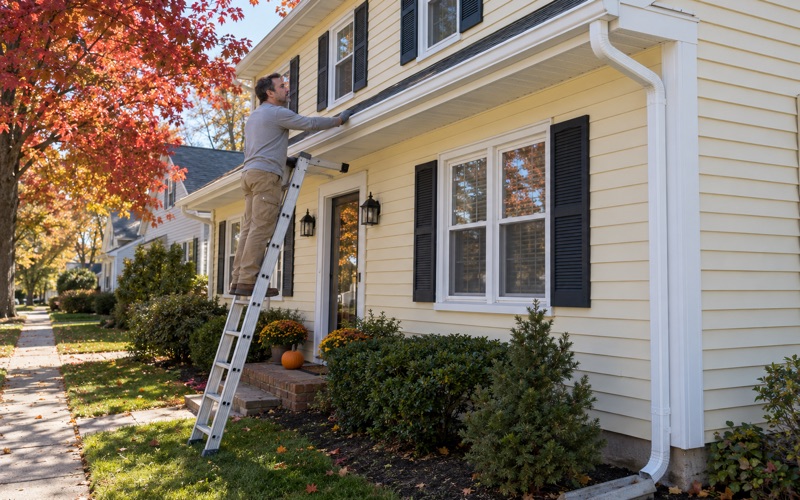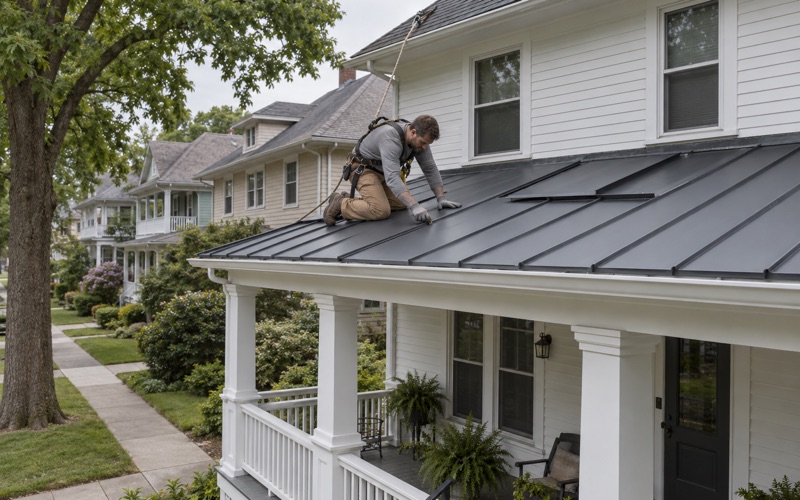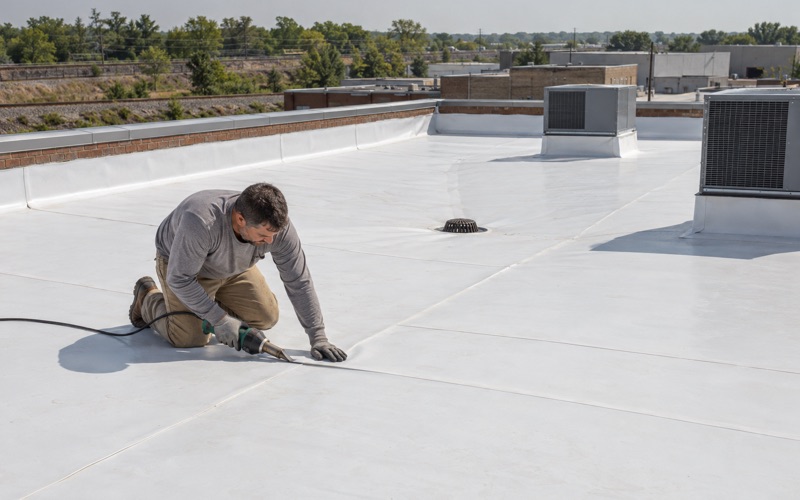
Clifton Elite Roofing has handled roofing in Oakland and the rest of northern New Jersey for more than 20 years, and the first thing we settle on any house here is whether the roof needs replacing at all. You get a plain answer on repair before replacement is ever priced, and when a leak brings us out, we go into the attic as well as onto the shingles so the water is traced to the spot where it actually enters.
When a new roof is the right call, the written scope breaks tear-off, decking, underlayment, flashing and ventilation into separate lines. That lets you lay our estimate beside anyone else’s and compare the same work item by item, instead of weighing two totals that may not describe the same job.
This page covers what is particular to an Oakland roof: the electric company that serves the borough, the service equipment that often sits on the roof line, and how a re-roof fits with rooftop solar on both the borough side and the utility side.
Oakland Runs on Rockland Electric, Not PSE&G
Much of Bergen County is PSE&G country, but Oakland is not. Orange & Rockland’s own corporate facts list Oakland among the New Jersey communities served by its subsidiary, Rockland Electric Company, and the listing carries no “(part)” note, so the whole borough sits inside that territory. For a homeowner planning roof work, that is the utility whose rules apply to anything electrical on the roof.
Why the utility matters on a roofing job
A roof is mostly shingles, underlayment and flashing, but on plenty of houses it is also where the electric service comes in. If the overhead line lands on a mast that rises through the roof, or a solar array is bolted to the rafters, the electric side of the house and the roofing side meet in the same few square feet. Knowing it is Orange & Rockland on the other end of that wire, and not the utility a neighbor two towns over deals with, saves wasted phone calls before the job starts.
We raise this at the estimate rather than on tear-off day. If the house has a mast, a drop or panels, those items go into the written schedule so everyone knows which day they matter and who needs to be involved.
What stays the same as anywhere else
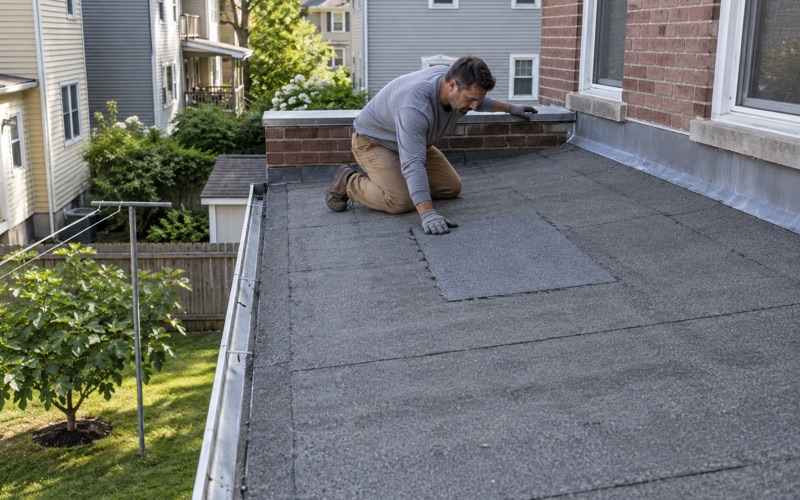
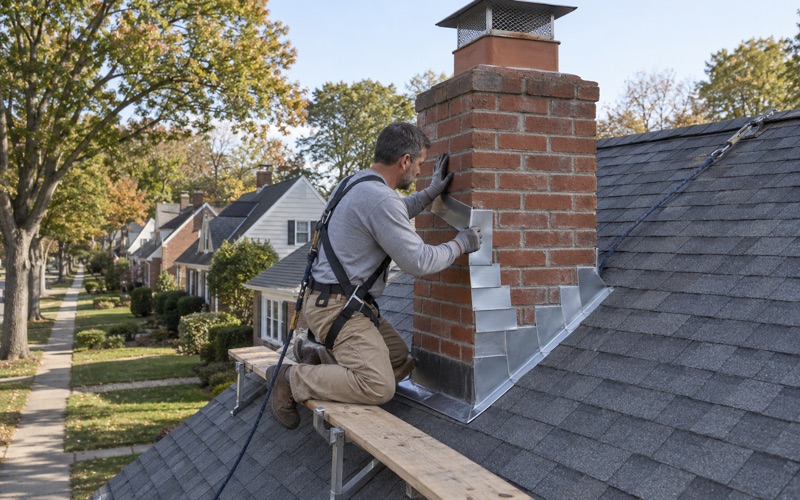
The utility changes nothing about how the roof itself is built. Ice and water barrier at the eaves, drip edge at the eaves and rakes, a starter strip, and properly lapped underlayment go down the same way on an Oakland house as anywhere else we work. Step, counter and chimney flashing is replaced with the new roof instead of being reused beneath fresh shingles, and we check ventilation on every replacement so the soffit intake is balanced against the ridge exhaust.
Looking for roofing closer to Florham Park? See Roofing in Florham Park.
Service Masts and Drops on the Roof Line
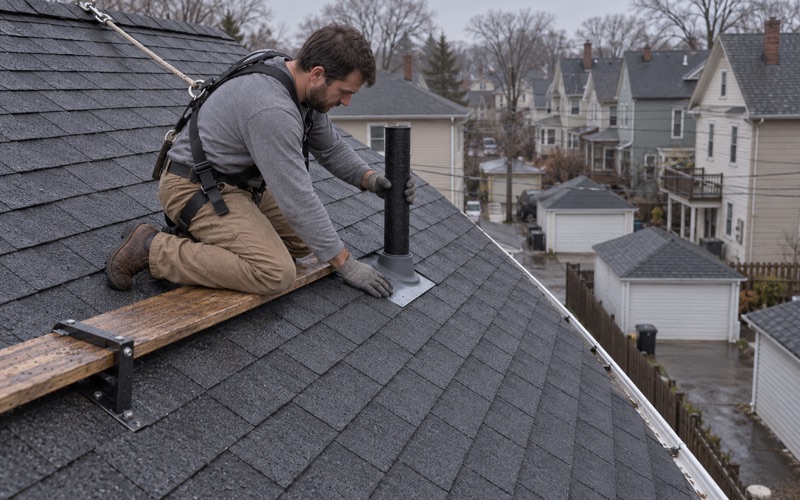
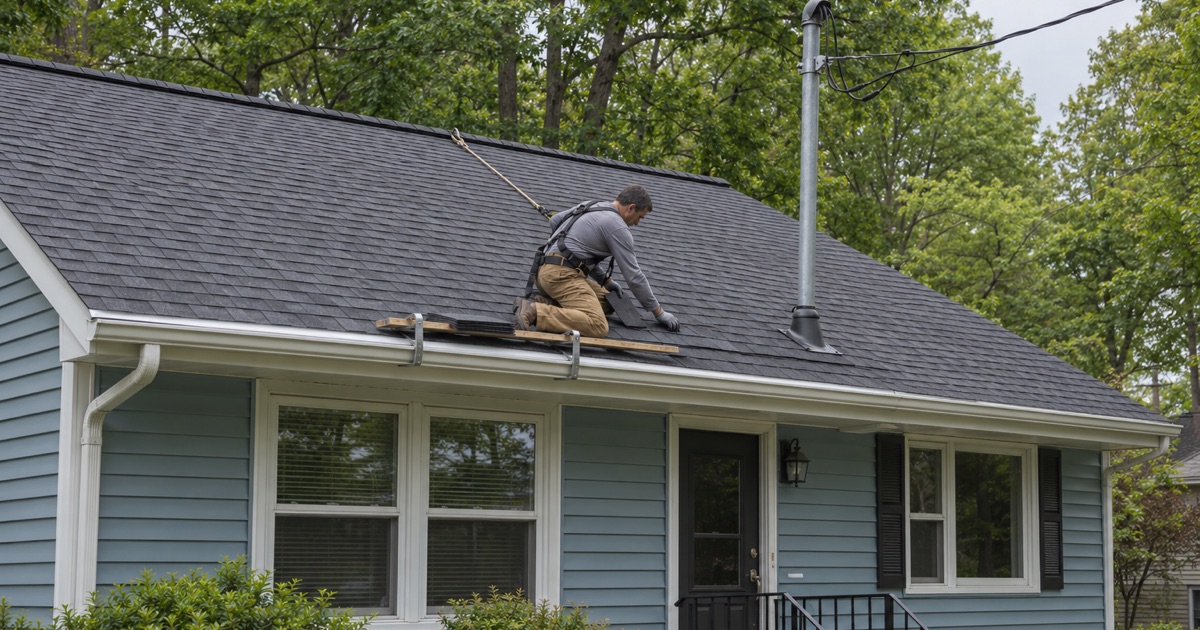
On a house where the overhead service enters through a mast, the mast pipe passes through the roof covering and is sealed with a boot or flashing collar. During a tear-off, that penetration is one of the few spots where roofing work and electrical equipment share space, so it gets planned rather than improvised.
Working around the mast without touching the electrical
We are roofers, not electricians, and we do not perform electrical work, disconnect service or touch the meter. Our job at the mast is the roof covering around it: new underlayment lapped correctly, a new flashing boot sized to the pipe, and shingles cut and sealed so water sheds past the penetration instead of into it. The mast, the weatherhead, the drop and anything energized are left alone.
If the mast itself is loose, rusted or leaning, that is a finding we photograph and show you, then leave for a licensed electrician and the utility to address. Nothing about the new roof gets finished over a mast problem that someone qualified has not looked at first.
Keeping the crew clear of the drop
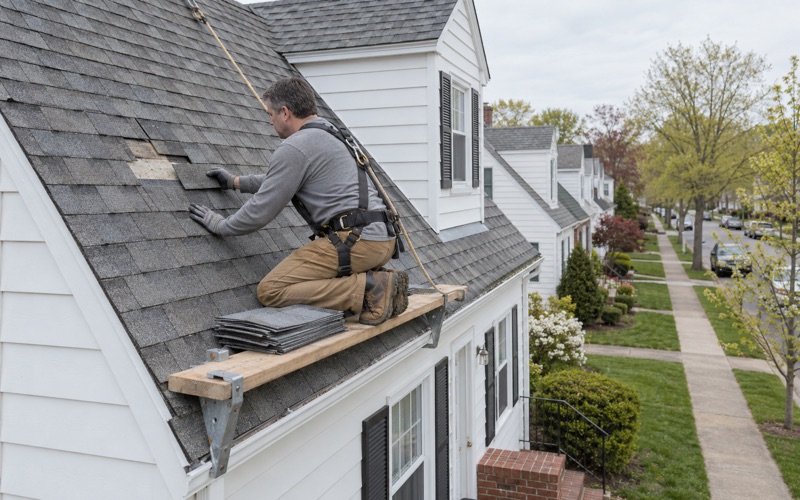
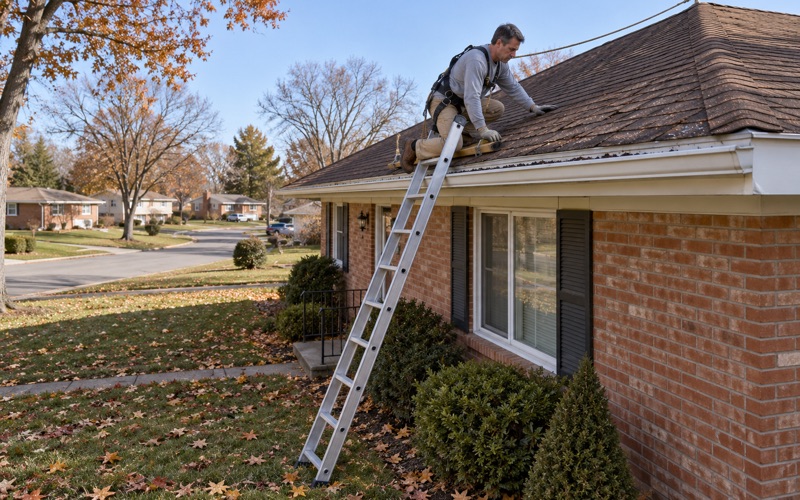
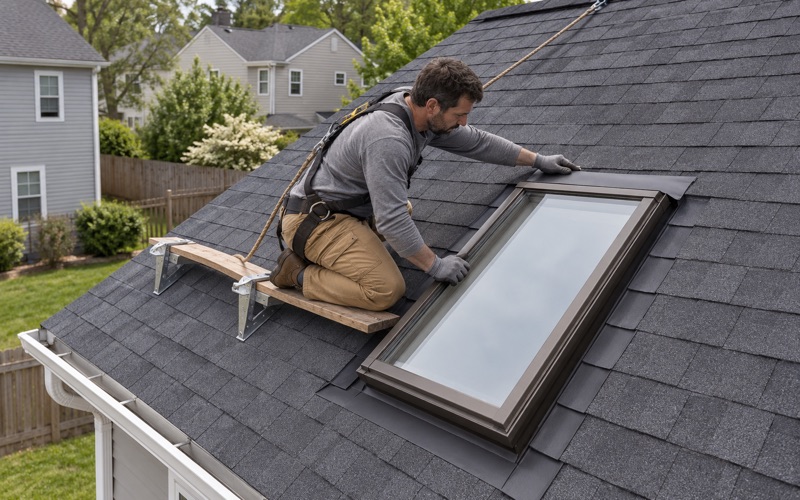
The overhead drop is a live line crossing the yard and the roof edge, and we lay out the work around it. Material deliveries, ladder placement and where the dumpster sits all take the line into account, and the crew works under OSHA fall protection rules for residential roofing, which apply at six feet. On a ranch or Cape Cod where the drop meets a low eave, that planning is part of the first walk-around, not something sorted out on the morning of the job.
Rooftop Solar: The Borough’s Two Permits and the O&R Application
Solar in Oakland moves on two separate tracks, and it helps to understand both before a roof is replaced under, or ahead of, a set of panels. One track runs through the borough, the other through Orange & Rockland.
The borough side: building and electrical permits
The Borough of Oakland’s Construction Work & Permit Requirements page lists solar as needing two permits, building and electrical. Those go through the borough’s Construction and Code Enforcement office at 1 Municipal Plaza, and inspections for open permits are scheduled through the GovPilot portal. That is a separate matter from the roof covering itself, which we come back to below.
The solar installer or the homeowner’s electrician pulls those permits for the array. Our part is the roof the array will sit on, and we schedule around the installer’s work so the two jobs do not trip over each other.
The utility side: Orange & Rockland’s Level 1 interconnection
On the utility side, Orange & Rockland’s New Jersey interconnection page sets out a Level 1 review for an inverter-based system with smart inverter capability and a nameplate rating of 50 kW AC or less, with export capacity of 25 kW AC or less. Applications are made online through O&R’s Power Clerk portal, and the page states plainly that Level 1 has no application fee.
The document list is specific: the application and agreement, a three-line electrical schematic, a site plan, the manufacturer’s data sheet, verification test procedures and a UL1741SB certificate, plus a letter of authorization when an agent applies for the owner. O&R’s page says that once a complete application is received and approved for installation, permission to operate is granted.
Who handles that paperwork
We do not file interconnection applications or work in Power Clerk; that belongs to the solar installer, the electrician or the owner. What we can do is tell you, before your installer applies, whether the roof under the planned array has enough life left to justify putting panels on it. A roof that will need replacing in a few years is better replaced first than worked around later.
Re-Roofing an Oakland House Before or Under Panels
The borough’s permit table settles the paperwork on a house roof in one line: “Residential - no permit is required if only shingles are being replaced.” That sits alongside the state’s ordinary-maintenance provision in N.J.A.C. 5:23-2.7, which covers roof covering on detached one- and two-family dwellings. Commercial roofing, by the borough’s own table, is a building-permit job.
When only shingles is no longer the whole job
The same table adds that “there may be other situations not listed which may also necessitate a building permit.” On a re-roof, that is the line that matters if tear-off exposes rotten decking or damaged framing. We photograph any damaged decking found once the old roof is off and show it to you before it is replaced, at the per-sheet price written into the contract, so a surprise under the shingles never turns into an open-ended bill.
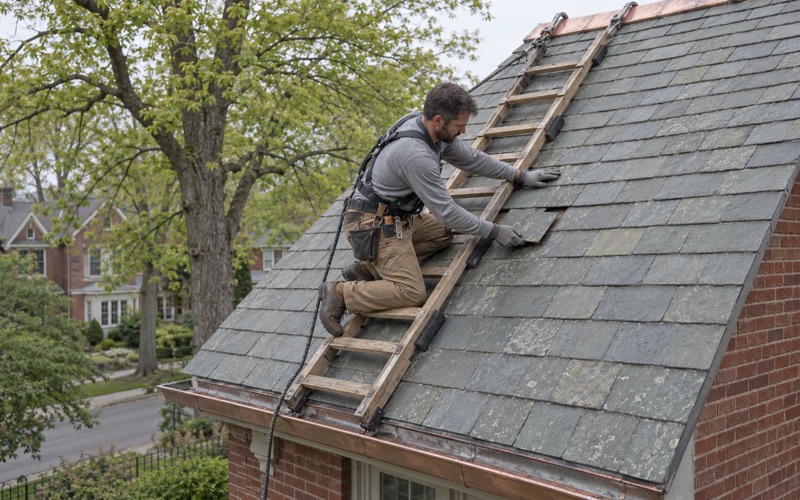
State rehabilitation rules also require a full tear-off when a roof already carries two or more layers, or when slate, wood shake or tile sits underneath. If an overlay is not an option on your house, we explain why before the estimate, not after.
Roofs that already have panels on them
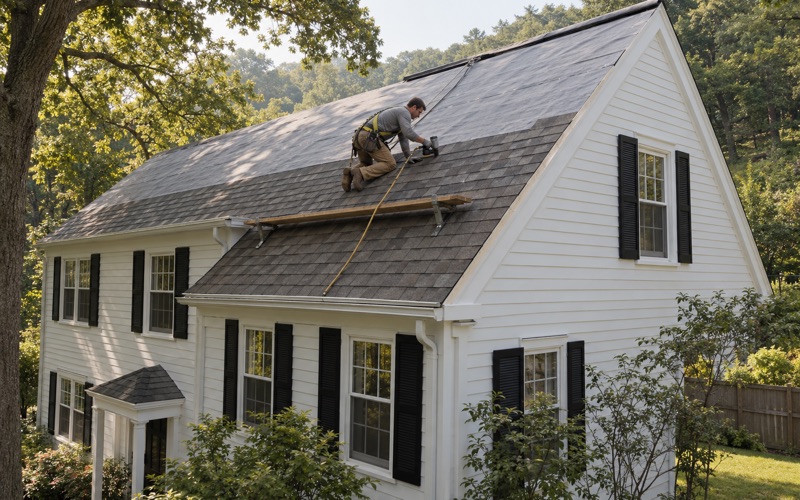
If your house already has a solar array and the shingles beneath it are failing, the panels have to come off before the roof can be replaced and go back on afterward. We plan that removal and reinstall into the schedule from the start, coordinated with whoever services the array, so it is not something discovered on the day the crew arrives. The roof under the rails gets the same underlayment, flashing and ventilation work as the rest of the house.
What Oakland’s housing stock means for the roof
Oakland grew fast after the war. The decennial census counted 1,817 residents in 1950 and 9,446 in 1960, and Census estimates put the median year built for the borough’s homes at 1960, with 63.1% of the housing built between 1950 and 1969. Houses from that era here tend to be ranches, split-levels and Cape Cods, and many of them are now on their second or third roof.
That age shows up in the details we check: older plank or plywood decking, chimney flashing that was reused more than once, and attic ventilation that was never balanced in the first place. A roof on a house this age is worth a proper attic inspection before anyone commits to new shingles or new panels.
Contracts, cleanup and storm damage
Our contracts follow New Jersey’s home improvement rules, including the three-business-day cancellation right on contracts over $500. At the end of every work day the yard, driveway and gutters are cleaned, with a magnet sweep for roofing nails so nothing sharp is left where the car parks.
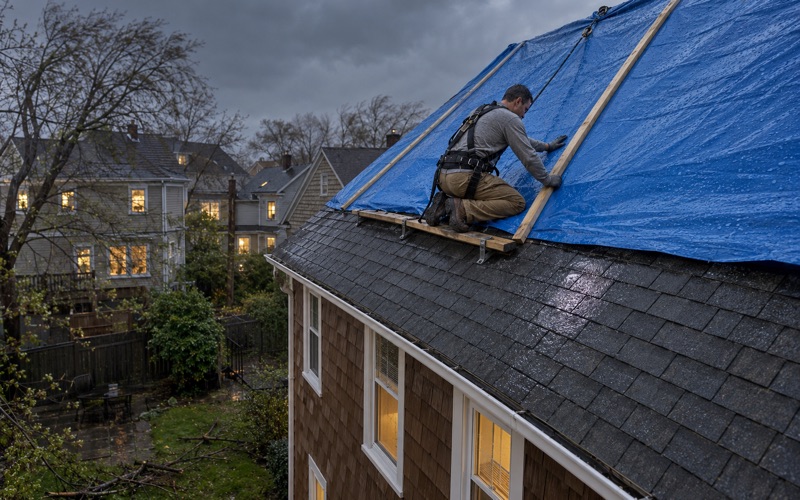
If a storm damages your roof, we photograph and write up the damage for your own claim, and the crew will meet the insurance adjuster on site when you ask. The claim itself stays between you and your insurer.
- 20+ Years on North Jersey Roofs
- Itemized Written Scopes
- Attic-to-Ridge Leak Tracing