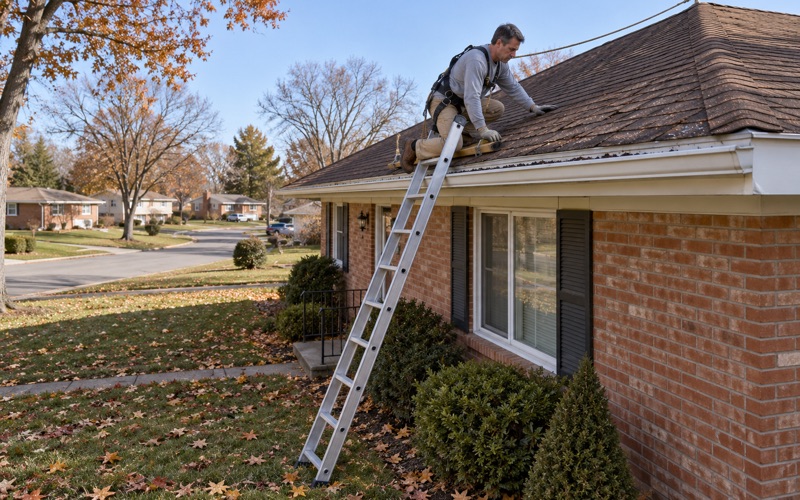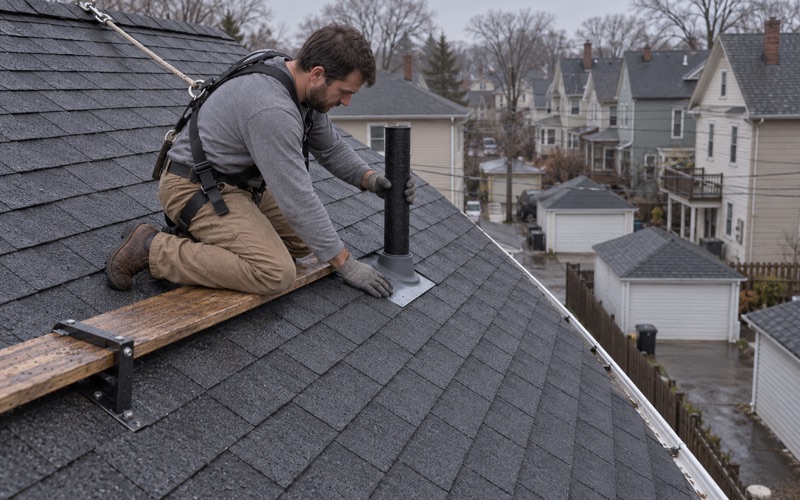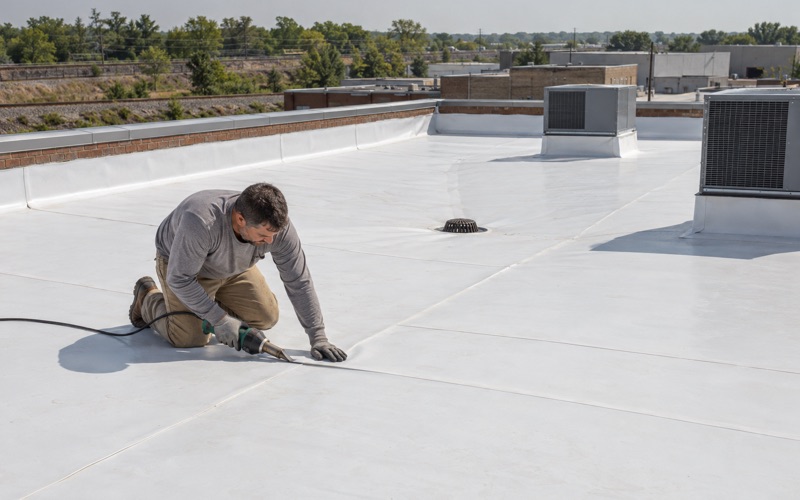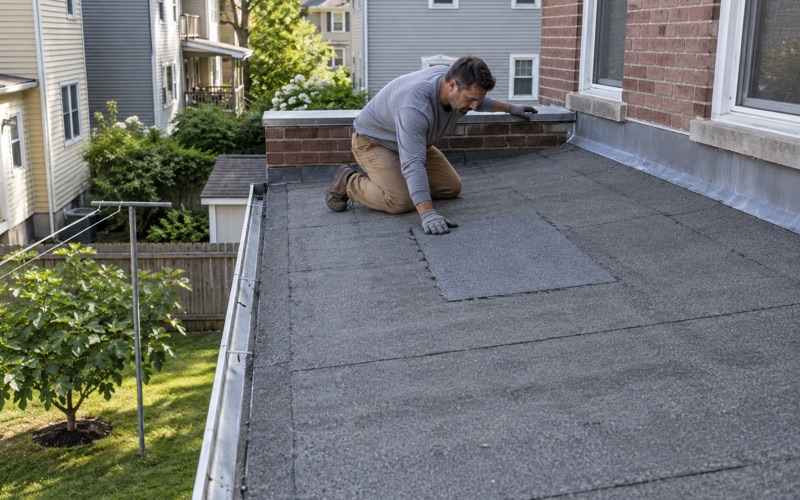
Clifton Elite Roofing has spent more than 20 years on roofing in River Edge and the rest of Bergen County, and the first thing we settle on any job here is whether the roof needs work at all. A leak call starts in the attic as well as on the shingles, because water often enters well uphill of the stain on the ceiling. Once we know where it actually gets in, you get a plain answer on whether a repair will hold before anyone mentions a new roof.
When replacement is the right call, the estimate breaks the job into its parts. Tear-off, decking, underlayment, flashing and ventilation each sit on their own line, so you can hold our number next to anyone else’s and compare like with like instead of guessing what a single total includes.
What makes a River Edge tear-off different is less about the roof than about the street in front of it. The borough controls how long a container may sit at the curb and what it must look like, and it will not collect roofing waste with the household trash. A good roofing plan here is built backward from those rules.
Planning a River Edge tear-off around a five-day container permit

The River Edge Building Department issues a Permit for a Refuse Container and Construction Trailers, the form most people call the dumpster permit. Its own wording is blunt: permits are issued for a maximum of five business days only. That window is the frame every replacement in town has to fit inside, and we schedule the crew to it rather than hoping a container can stay put while the job stretches.
What the container form asks for
The form records the dumpster company, where the container will sit, its size, and the dates it is dropped off and taken away. Those details have to be known before the first shingle comes off, so we work out the likely volume of debris with you during the estimate. A house carrying two layers of old asphalt fills a container far faster than a single layer, and the size has to match the job on the first try.
The form is signed off through the Building Department, where Robert E. Byrnes is named as Construction Official. We are happy to walk through the dates we need so the container arrives the morning tear-off starts and leaves once the last load is in, not days later.
Sequencing the work inside the window
Five business days is enough for most single-family replacements, but only if the days are planned. Tear-off and decking inspection come first, underlayment and drip edge follow, then shingles, flashing and ridge work. We keep the heavy debris days at the front of the window so the container is not still filling when its permit runs out.
Weather can still cost a day, which is why we do not start a tear-off on a forecast that leaves the roof open into a wet afternoon. River Edge falls under the National Weather Service’s Eastern Bergen forecast zone, and we watch that forecast for the full stretch before setting a start date. A delayed start is better than a container sitting out on borrowed time.
When the decking surprises everyone
Rotted or delaminated sheathing usually shows up only after the old roof is stripped. When it does, we photograph it and show you before any of it is replaced, and the per-sheet price is already written into the contract. Nothing about that decision should eat into the permit window, so the replacement plywood is planned as a possibility from day one.
Looking for roofing closer to Ridgefield? See Roofing Services in Ridgefield.
Chapter 182 and why roofing debris never sits at the curb
The dumpster permit form spells out the borough’s marking rule. Per state law and Chapter 182 of the River Edge code, a container on the street must carry all-yellow reflective diamond-shaped panels at least 18 inches by 18 inches. They go on both ends nearest passing traffic, facing oncoming cars, with the bottom of each panel at least three feet above the roadway.
The reflective panels and the police
The form states that a violation of Chapter 182 brings a summons from the River Edge Police Department. Whoever supplies the container is the one who mounts the panels, but on any job we are part of, we check that they are there and still facing traffic after the drop-off. A container that gets nudged during loading can end up with a panel turned the wrong way, and that is an easy thing to catch on a walk around at the end of the day.
No construction debris at the curb
The borough’s property maintenance page puts it in capital letters: no construction debris will be picked up at the curb, and a violation may be issued. That covers torn-off shingles, felt and synthetic underlayment, old flashing and bent drip edge. On a River Edge job, every scrap of the old roof leaves in the permitted container, and none of it gets bagged and set out with the regular trash.
The officer behind that rule works out of the property maintenance office at 10 River Edge Road. If a neighbor raises a concern, the answer should be simple: the debris is in the container, and the container is permitted and marked.
The yard at the end of each day
Keeping debris off the curb is only half of it. At the close of every work day we clean the yard, the driveway and the gutters, and we run a magnet sweep across the lawn and walkways for roofing nails. On a narrow lot where the container sits close to the house, that sweep matters even more, because loading traffic spreads nails toward the street.
Roofing on River Edge houses from the 1940s and 1950s
Much of River Edge was built in a short stretch. Census estimates count 1,106 homes built in the 1940s and 1,138 in the 1950s, together 48.9 percent of the borough’s 4,590 housing units, with another 712 built in 1939 or earlier. One-unit detached houses make up 72.2 percent of the stock, so a typical job here is a single-family house that has already been reroofed more than once.
Counting the layers before the estimate
A house of that age may have a second layer of shingles laid over the first at some point. New Jersey’s rehabilitation subcode calls for a full tear-off once a roof already has two layers, or when the existing roof is slate, wood shake or tile underneath. When an overlay is not an option for that reason, we explain why before the estimate is written, so the cost of the tear-off is not a surprise.
A tear-off on these houses also means more weight in the container than people expect. Two layers of asphalt plus old felt is part of why the container size on the permit form has to be right the first time.
Chimneys and the flashing around them
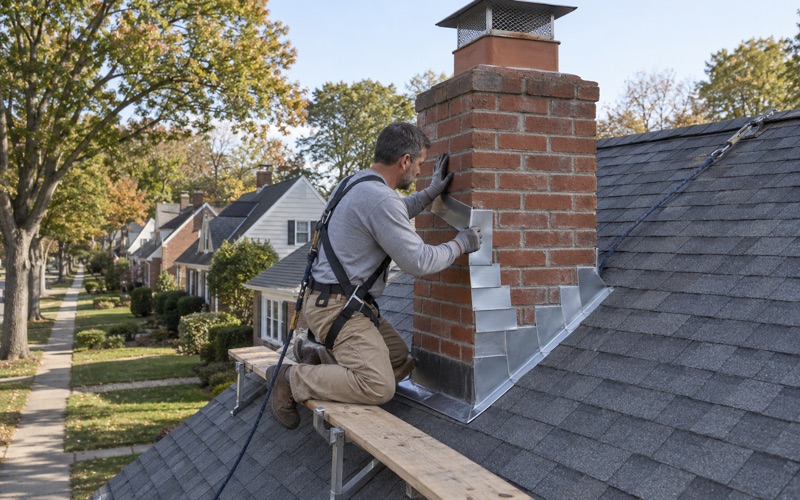
Many mid-century houses here still have a masonry chimney punching through the roof. We replace step, counter and chimney flashing as part of the new roof rather than bending the old metal back over fresh shingles. Where a wide chimney sits across the slope, a cricket behind it keeps water from pooling against the brick.
The same goes for pipe boots and the apron flashing where a lower roof meets a wall. On an older house those details are where most of the leaks we trace from the attic actually begin, so they are new on every replacement we do.
Attic ventilation on an older frame
Houses built before modern vent standards often have little soffit intake and a couple of small gable louvers. On every replacement we check ventilation and balance intake at the soffit against exhaust at the ridge, usually with a ridge vent sized to the attic. Getting that balance right helps keep the new shingles and the decking under them in better shape for longer.
Garden-apartment roofs, two-family houses and who decides
River Edge is not only single-family homes. The census counts 627 housing units in buildings of three or four units, about 13.7 percent of the borough, and 590 of River Edge’s 1,071 renter households live in that size of building. On those garden-apartment roofs, the person calling us about a drip is often not the person who can approve the work.
Owners and associations sign off
For a three- or four-unit building, the roofing decision sits with the owner or the association, not the tenant who noticed the stain. We are glad to come look at a leak a tenant reports, but the written scope goes to whoever holds authority over the roof. Because each line item is listed separately, a board or an owner can approve the flashing and decking work with full knowledge of what they are paying for.
Contracts are written to New Jersey’s home improvement rules, including the three-business-day cancellation notice on contracts over $500. That gives an owner or association room to review the scope before work is locked in.
Scheduling around the people inside
On a two-family house or a small apartment building, we schedule with every floor in mind. The tenant upstairs hears when the crew will arrive and where we will need access, whether that is the attic hatch, a top-floor closet or a back stair. A tear-off is loud, and knowing the five-day plan in advance makes it easier on everyone living under it.
Solar panels and older roofing on the same building
If a building carries solar panels, removing and reinstalling them goes into the schedule at the start, not on the day the crew finds them. That step has to fit inside the same five business days as the rest of the work, so it is planned with the container dates.
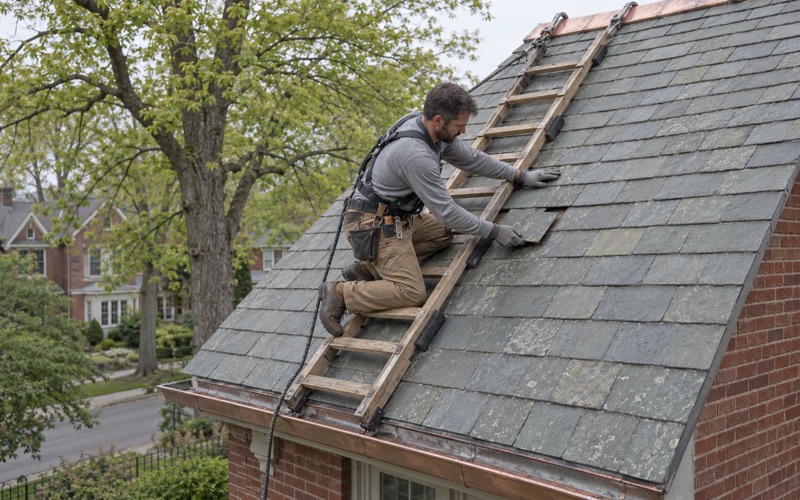
Older slate, where it turns up, gets the same honest look. Sound slate can be repaired with matching slate, copper nails and slate hooks rather than torn off by default. At Historic New Bridge Landing, the state preserves the Steuben House, a Bergen Dutch sandstone house a historical society source says was expanded by 1765 into a 12-room house under a gambrel roof. It is a state historic site run by a park commission rather than a rule for private homes, but it shows how long people in River Edge have been keeping roofs over the same walls.
- 20+ Years on North Jersey Roofs
- Itemized Written Scopes
- Attic-to-Ridge Leak Tracing