Clifton Elite Roofing provides roof inspection in Clifton, NJ, serving surrounding cities including Woodland Park, Wallington, Wood-Ridge, Rutherford and Totowa. In more than 20 years on local roofs, we have found that the most useful inspections are the ones that look at the attic as well as the shingles, because most roof problems show up underneath long before they show up on a ceiling.
An inspection with us ends with photos and a written report in plain language: what is sound, what needs attention now, what can wait, and what each fix would involve. If the roof can be repaired, we say so before replacement is ever mentioned, and if it cannot, the report explains the evidence behind that call.
Homeowners call us before a sale or purchase, after a storm, when a ceiling stain appears, or simply because a roof is getting old and they want to plan the next step instead of finding out from a leak. Owners and managers of small commercial and multifamily buildings call for the same reasons on a larger scale.
Residential Roof Inspection
Shingles, Slate and the Roof Surface
On shingle roofs we look for missing, creased and curling tabs, broken seal strips, exposed nail heads and granule loss, which shows up as bald patches on the roof and as grit collecting in the gutters. These signs tell us how much life the shingles have left and whether damage is spread across the roof or limited to one slope.
On slate we check for cracked, slipped and missing pieces, soft or flaking stone, and rusted nails letting slates slide. Sound slate is noted as worth keeping, because a slate roof that only needs repair should not be written up as a replacement.
Flashing, Valleys and Penetrations
Most leaks start at transitions rather than in the open field of the roof. We inspect step and counter flashing at chimneys and sidewalls, the cricket behind wider chimneys, valley metal, pipe boots, skylight flashing and kick-out flashing where a roof edge meets a wall.
We also note flashing that was reused from a previous roof or sealed over with layers of roofing cement. Both are common on older North Jersey houses, and both tend to fail before the shingles around them do.
The Attic: Decking, Ventilation and Moisture
From inside the attic we look for water stains on rafters and sheathing, daylight around penetrations, soft or delaminated decking, and mold or frost on the underside of the roof. We check the soffit intake and ridge or gable exhaust to see whether the attic can breathe, and whether bath or kitchen fans are venting into the attic instead of outside.
The attic is where condensation problems reveal themselves, and those are often mistaken for roof leaks. Separating the two saves owners from paying for roof work that would never have fixed the problem.
Gutters, Leaders and the Roof Edge
Gutters that overflow, pull away or pitch the wrong way send water into fascia, soffits and foundations. We check gutter pitch and fasteners, leader connections, drip edge at eaves and rakes, and the condition of the fascia board behind the gutter, which often hides rot where nobody looks.
Leaders that dump water at the foundation, or onto a lower roof without a splash guard, are noted as well. On two-family houses with a porch or rear addition, an upper leader emptying onto the lower roof is a common reason that section wears out years ahead of the main roof.
Inspections for a Sale, a Purchase or Insurance
Pre-Listing and Pre-Purchase Roof Inspections
A buyer’s home inspector will comment on the roof, and a vague note about age or wear can become a bargaining point. A roofer’s inspection before listing tells you exactly where the roof stands, what a repair would cost, and whether a fix makes more sense than a price concession.
For buyers, an inspection by a roofer adds detail a general home inspection rarely covers, such as how many layers the roof has, the condition of the decking and flashing, and whether New Jersey’s two-layer limit would force a full tear-off at the next replacement.
After a Storm or Falling Limb
Wind can lift and crease shingles without tearing them off, and a branch strike can crack decking under shingles that look intact from the ground. We photograph the roof after the event, separate fresh storm damage from long-term wear, and write up the findings for your own claim.
If the roof is open, we tarp it first and inspect in detail once it is safe. The crew will meet your insurance adjuster on the roof when you ask, so both sides are looking at the same evidence.
Roof Condition, Insurance and Renewals
The age and condition of a roof can affect what an insurer covers and how an older roof is valued on a claim. A written condition report gives you a clear record of the roof’s state at a point in time, which is useful at a policy renewal and when questions about the roof’s age come up later.
Many policies settle an older roof on actual cash value, which subtracts depreciation, while a replacement cost policy pays to replace it without that deduction. Knowing the roof’s real condition helps you read your own policy and decide whether a repair, a replacement or simply monitoring the roof makes the most sense.
Commercial and Multifamily Roof Inspection
Low-Slope Membrane Roofs
Commercial and mixed-use buildings usually have EPDM, TPO, PVC or modified bitumen roofs, where problems hide at seams, drains, curbs and parapets. We check seam adhesion and welds, flashing at rooftop units and penetrations, coping and edge metal, and signs of ponding water that shorten a membrane’s life.
When a low-slope roof is being recovered or replaced, New Jersey’s 2024 building subcode adopts the IBC requirement to analyze susceptible roof bays for ponding stability. An inspection that records where water stands is a useful starting point for that conversation.
Condominium and Association Roofs
New Jersey’s Structural Integrity Law, P.L.2023, c.214, requires covered associations to fund capital reserves based on a reserve study with a 30-year funding plan. Roofs are among the largest items in that plan, and a roofer’s condition report gives the board and its reserve specialist real observations on remaining life rather than guesses.
We inspect each roof section separately and note its covering, approximate age, visible defects and drainage, so the report lines up with how the building’s components are listed. The reserve study itself is the association’s professional’s work; our role is the roof observations behind it.
Our Step-by-Step Roof Inspection Process
Step 1: Ground and Exterior Walk-Around
We start from the ground, looking at roof lines for sagging, the condition of gutters and leaders, and staining on siding or fascia. This also tells us how to access the roof safely and which areas deserve a closer look.
From the ground we also count visible layers at the rake edge where we can, note the type of roofing on each section, and check whether solar panels, satellite dishes or rooftop equipment will limit access. Those details shape both the inspection and any later repair or replacement plan.
Step 2: On the Roof or Alongside It
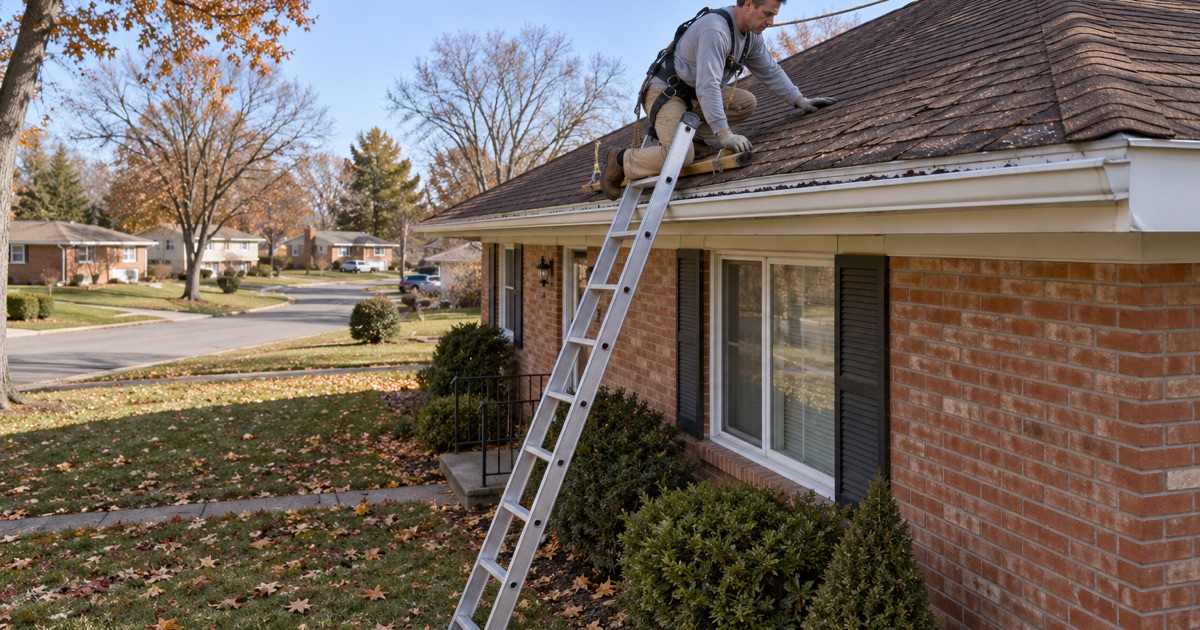
Where the pitch and material allow, we walk the roof with fall protection appropriate to the height. On slate, tile and very steep roofs we inspect from ladders, roof brackets and close-up photographs instead of walking on surfaces that can break underfoot.
Step 3: Inside the Attic
We compare what we saw outside with what the attic shows underneath: stains, wet sheathing, daylight, ventilation and insulation. Matching the two is how we pin down the source of a problem rather than guessing from one side.
Step 4: Photo Report and Recommendations
You receive photos of every concern, a plain explanation of each, and our recommendation ranked by urgency. If repair is the right call, the report says so first, and any replacement discussion comes with the reasons behind it.
- 20+ Years on North Jersey Roofs
- Itemized Written Scopes
- Attic-to-Ridge Leak Tracing