Clifton Elite Roofing has been handling roofing in Totowa and the rest of Passaic County for more than 20 years, and one of the first things we do here costs the homeowner nothing. Before we price a roof, we ask what the borough already knows about the house. Totowa keeps that record online, and reading it with you tells us what has been permitted on the roof frame and what has not.
That record is useful, but it has a blind spot that catches people out. A shingle re-cover on a detached house is ordinary maintenance in New Jersey and leaves no entry, so a clean history does not mean an original roof. We pair the paperwork with what we see from the ladder and in the attic, and we tell you plainly whether the roof can be repaired before replacement ever comes up.
The sections below walk through how to look up your own permit history, what that history can and cannot tell you, what we expect to find on the mid-century houses that make up so much of the borough, and where the rules change for attached homes and trees near the roof.
Looking Up Your Totowa Permit History, and What It Leaves Out
The Totowa Building Department works out of 537 Totowa Road, 2nd Floor, and it handles applications and permit history through an online Construction Permit Self Service portal. The borough page says a property owner can view the permits and permit history for their own property there. Usernames and IDs are issued by the Building Department, so the first step is a call or visit during office hours, Monday through Friday from 9:00 a.m. to 4:30 p.m.
What the portal does, and what it does not
The page describes two uses: owners see the history on their property, and contractors see permits on which they are listed as the contractor. That is the extent of what we will promise about it. If you want to do something else through the borough, such as arrange an inspection, we suggest calling the department rather than assuming the portal handles it.
Allan Burghardt is listed as Construction Code Official, Building Subcode Official and Zoning Officer, with availability from 2:00 to 5:00 p.m. on weekdays. He holds the same construction official post in neighboring Woodland Park, so a question that spans both boroughs often lands on the same desk.
The part of the record that matters for a roof
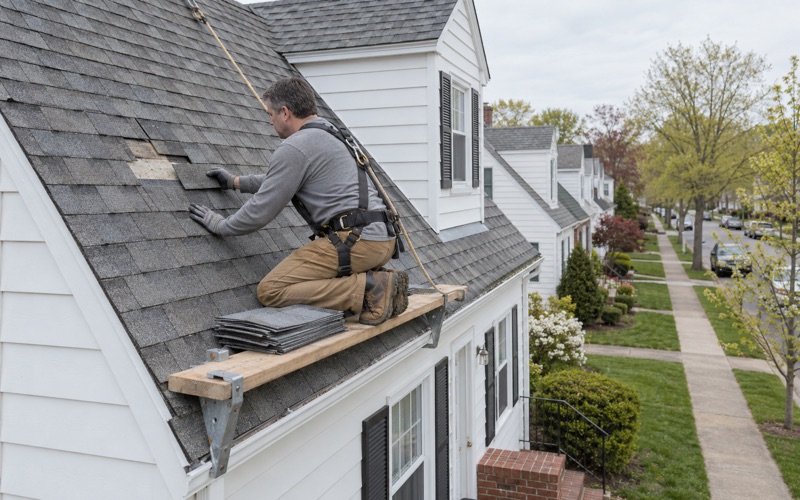
When we sit down with a homeowner’s printout, we look past the routine entries for anything structural above the top floor. Replaced sheathing, repaired or sistered rafters, and a framing change around a dormer all show up as permitted work. Those entries tell us where someone has already opened the roof structure, which changes how we plan a tear-off and what we look for in the attic.
The record also shows permitted re-roofs on attached homes and multifamily buildings, because that work needs a permit or a minor-work notice. If you own a townhouse or a unit in a larger building, the portal is often the quickest way to date the last roof.
Why a blank entry proves nothing
Under N.J.A.C. 5:23-2.7(c), replacing the roof covering on a detached one- or two-family dwelling is ordinary maintenance. That means an earlier crew could have stripped and reshingled your house, or laid a second layer over the first, without ever creating a permit entry. A blank roof history on a detached house is simply silent about the roof’s age.
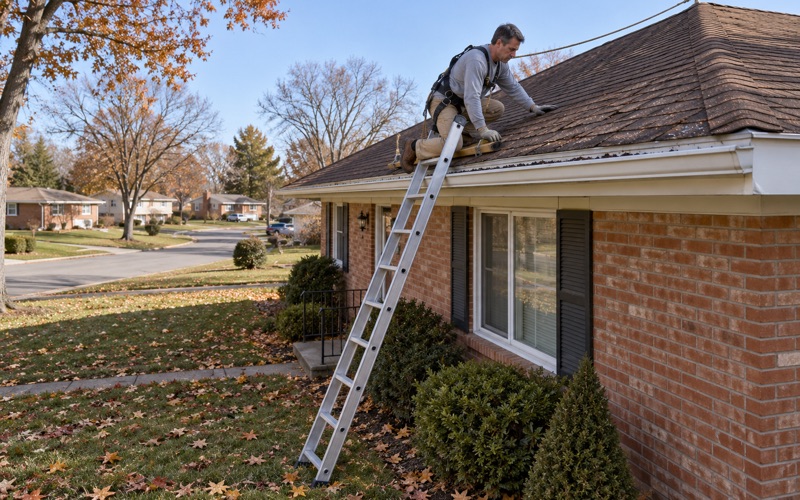
This is why our leak calls and estimates always include an attic look as well as a roof walk. Nail patterns, stains on the underside of the deck and the number of layers visible at the rake tell the real story. The permit record frames the questions, and the house answers them.
Looking for roofing closer to Hasbrouck Heights? See Hasbrouck Heights Roofing.
1950s Houses and the Deck Under the Shingles
Totowa is a mid-century borough. Census estimates count 1,114 of its 3,980 housing units as built in the 1950s, about 28 percent, and 56.4 percent of all units predate 1960. Many of those houses have been through more than one roof cycle, so the open questions on a re-roof are how deep the tear-off goes and what shape the original board sheathing is in once it is exposed.
Layers, and when an overlay is off the table
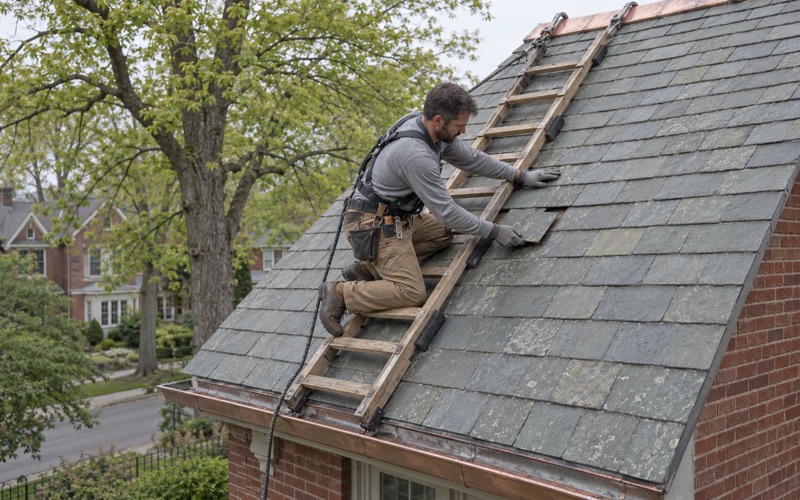
New Jersey’s rehabilitation subcode requires a full tear-off when a roof already carries two or more layers, or when the existing covering is slate, wood shake or tile. On an older house that has already been re-covered once, a second overlay is often not an option. When that is the case, we explain the reason before we hand you an estimate, so the price does not arrive as a surprise.
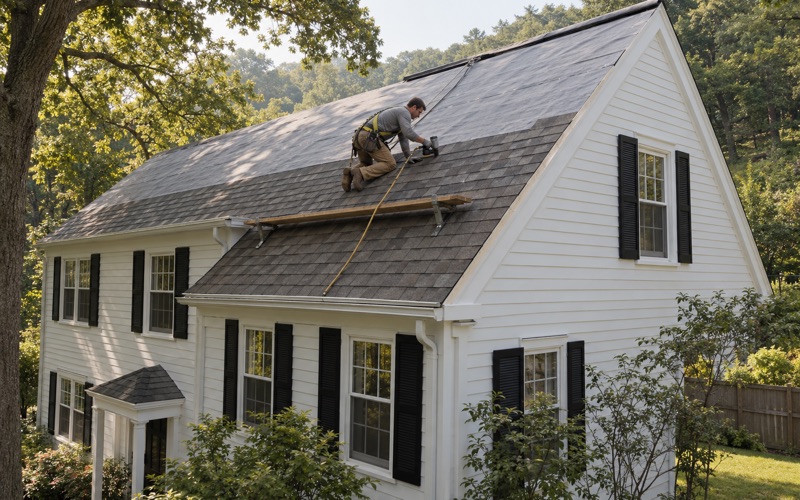
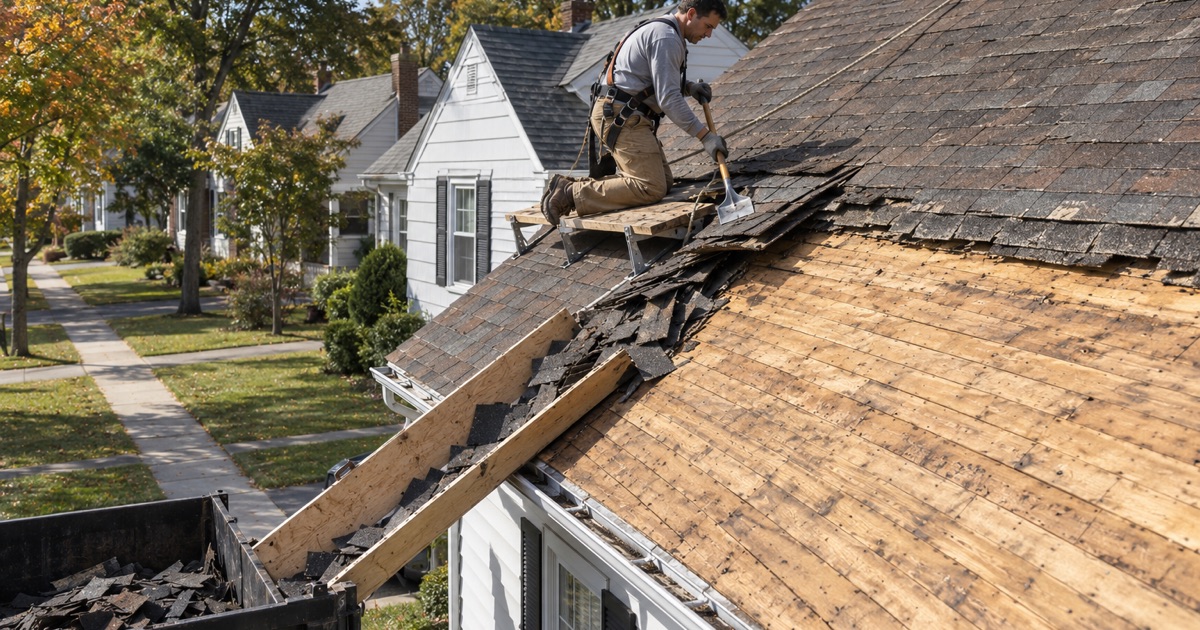
We also expect to pull more weight off a 1950s roof than off a newer one. Two layers of asphalt, old felt and a buried drip edge all come off before we see the deck. Our written scope lists tear-off, decking, underlayment, flashing and ventilation as separate lines, which lets you compare our number with another contractor’s item by item.
Board sheathing, photographed before it is replaced
Houses of this era were often decked with solid boards rather than plywood. Boards can be perfectly sound after 70 years, or they can show gaps, splits and soft spots around old leaks, chimneys and vent pipes. We will not guess at it from the driveway.
When damaged decking turns up after the old roof is off, we photograph it and show you before anything is replaced. Replacement sheets are priced per sheet in the contract, so the extra cost is set in writing before the job starts. On board decks we may also recommend new sheathing over the boards where gaps are too wide to nail into reliably, and we explain that choice with photos.
Flashing and ventilation on a mid-century roof
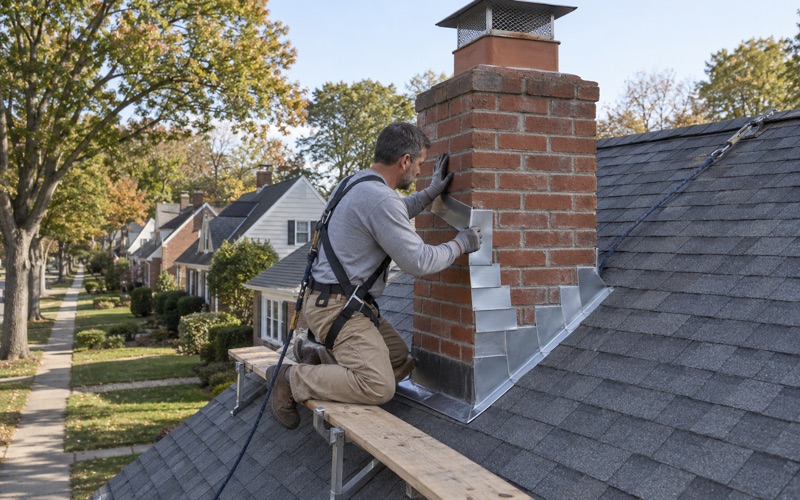
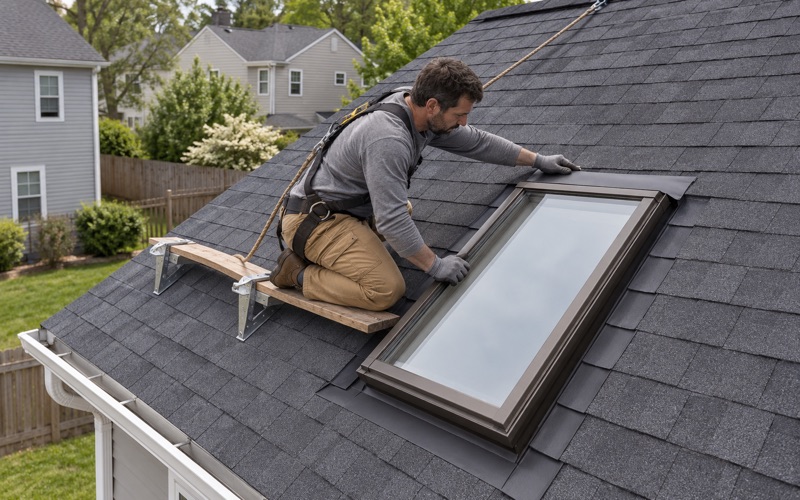
Chimneys, low-slope porch tie-ins and dormers are where older roofs leak first. We replace step, counter and chimney flashing with the roof rather than bending old metal back into place under new shingles. Where a chimney is wide enough to trap water behind it, we discuss adding a cricket at the same time.
Many houses of this vintage were built with little or no attic ventilation, or have had vents added piecemeal over the years. On every replacement we check intake at the soffit against exhaust at the ridge and size them to work together. A roof with balanced airflow sheds summer heat and limits winter condensation on the underside of the deck.
Attached Homes, Two-Family Houses and Permit Work
Not every Totowa roof falls under the ordinary maintenance rule. Census figures count 477 one-unit attached homes in the borough, about 12.0 percent of units, along with 423 units in two-unit buildings. The rules differ between those two groups, and we sort out which one applies to your house before we schedule anything.
Where the permit applies
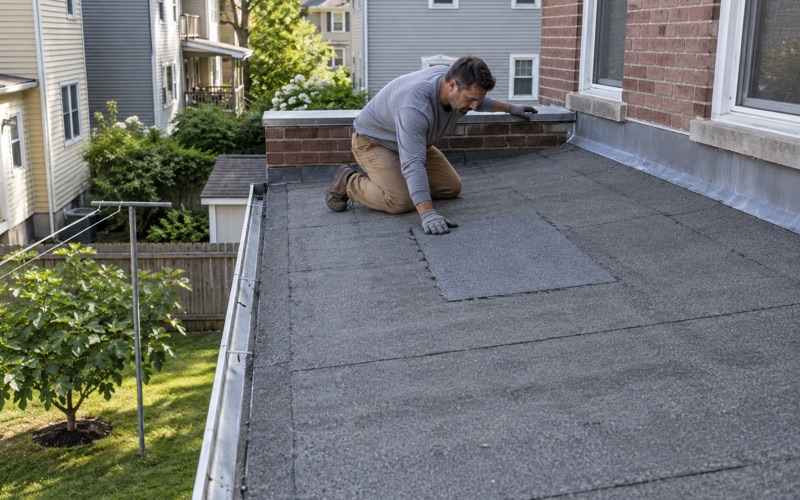
A re-roof on an attached home or a multifamily building needs a permit or a minor-work notice through the Building Department. We plan for that in the schedule rather than treating it as paperwork for the last minute. On a shared roofline, we also look at how your section meets your neighbor’s, since a tie-in at a party wall needs careful flashing to keep water from traveling between units.
A detached two-family house, by contrast, still falls under the ordinary maintenance rule for a covering replacement. What changes is the logistics. Two households live under one roof, and both are affected by noise, debris and access.
Working around two households
When we work on a two-family house, we schedule with both floors in mind. The tenant upstairs is told when the crew arrives and where we may need access, such as an attic hatch or a third-floor window. That keeps the day predictable for everyone in the building.
At the end of each work day, we clean the yard, the driveway and the gutters, and we run a magnet sweep for roofing nails. With children and cars from two households using the same driveway, that sweep matters.
Contracts written to New Jersey rules
Every contract we write follows New Jersey’s home improvement rules, including the three-business-day cancellation notice. If a storm caused the damage, we photograph it and write it up for your own claim, and we will meet your insurance adjuster on site when you ask us to. The claim stays yours to manage, and our role is to document the roof accurately.
Trees Near the Roof, and a Few Local Notes
The Building Department page states that permits are required for any tree removal in Totowa, alongside driveways, sidewalks and fence replacements. A limb hanging over your roof or a tree leaning toward the house is therefore a permit question in the borough before it is a sawing job. We have not reviewed the ordinance’s fee or criteria, so we suggest calling the department to confirm what your situation needs.
Sequencing tree work with a roof job
If a tree is dropping debris into your valleys or scraping the shingles, we recommend settling the tree question first. Removing a large limb after a new roof is on risks damaging the shingles you just paid for. We can note in our written assessment where branches contact the roof and where clogged gutters are holding water at the eaves, which gives you something concrete to bring to the department.
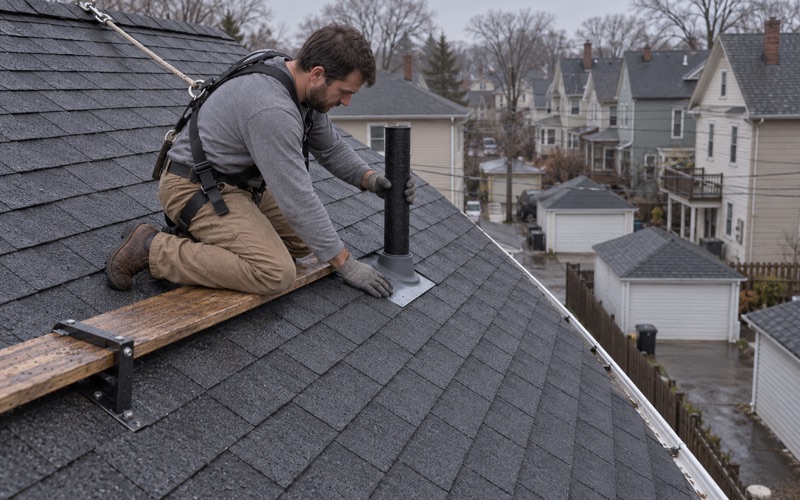
We also look for roof damage the tree has already caused. Punctured shingles, cracked pipe boots and dented drip edge are common where limbs rub in the wind, and those repairs can often be made without replacing the whole roof.
Freeze cycles and the local weather record
The nearest long-term weather station is in neighboring Little Falls, and its 1991-2020 normals record 117.4 days a year with a low at or below 32 degrees. That is a lot of freezing and thawing at the eaves, where ice can back up under shingles on a poorly vented roof. We look closely at the lower courses, the gutters and the underside of the deck at the overhang when we inspect a Totowa house in late winter or spring.
The borough’s own setting is easy to find, between Route 46 and Interstate 80, with the Passaic River along part of its edge. Riverside flooding is a foundation and lower-floor concern rather than a roof one, so we keep our advice to what happens above the ceiling. If your concern is water at the top of the house, the attic is where we start.
- 20+ Years on North Jersey Roofs
- Itemized Written Scopes
- Attic-to-Ridge Leak Tracing