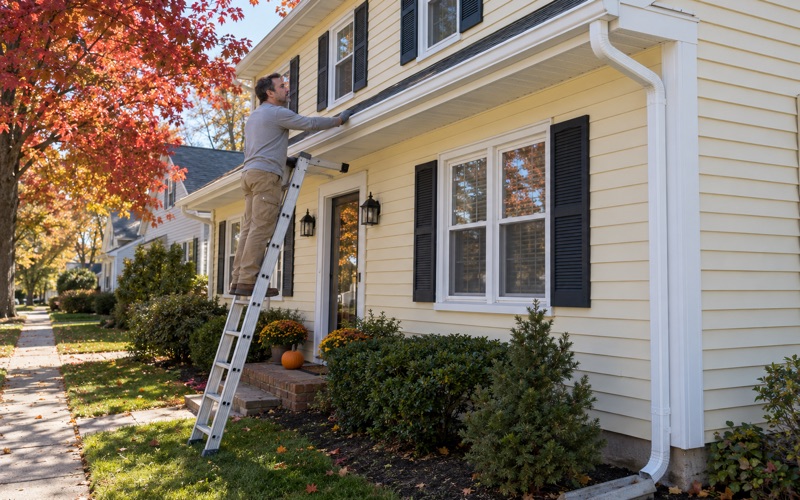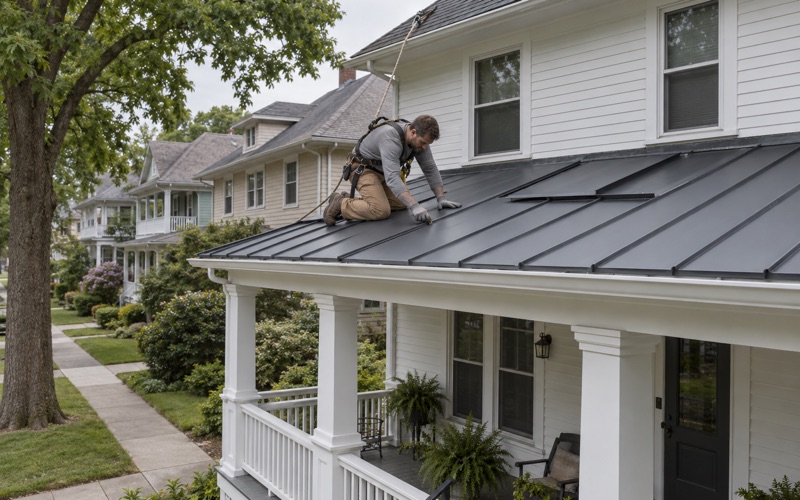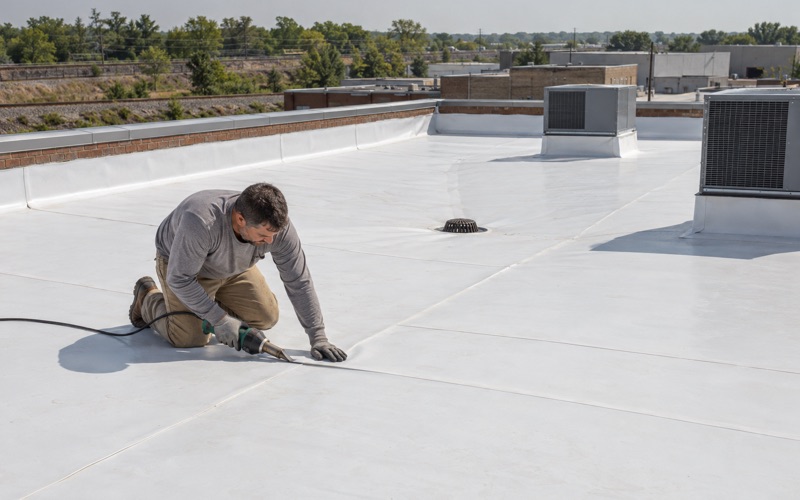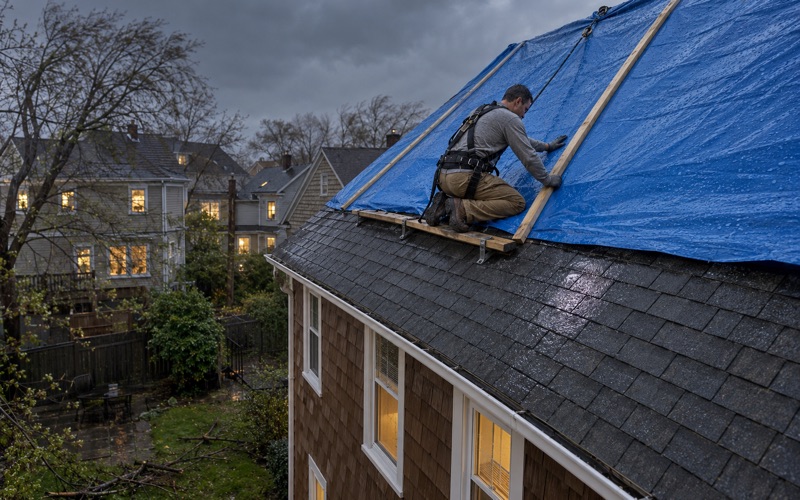
Clifton Elite Roofing has spent more than 20 years on roofing in Waldwick and the rest of northern New Jersey, and the work here splits into two very different jobs. Most of the borough sits under asphalt shingles on houses from the middle of the last century, while a handful of older buildings carry slate, brick chimneys and detail that a quick shingle job would ruin. We price both kinds of roof the same honest way: we look first, then we tell you what the roof actually needs.
That starts with a straight answer on repair. Before anyone mentions a replacement, we tell you whether the roof in front of us can be fixed, and if a leak is the reason you called, we go into the attic as well as up on the roof so the price is built on where the water really enters. A stain on a bedroom ceiling is often several feet away from the hole that feeds it.
When a new roof is the right call, the estimate you get breaks tear-off, decking, underlayment, flashing and ventilation into separate lines. You can lay it beside any other bid and compare the two item by item instead of guessing what a single lump sum includes.
What the Erie Railroad Landmarks Show About a Period Roof
Waldwick holds two National Register landmarks from the railroad era, and both are worth a look before you decide what to do with an older roof of your own. Neither is a building we worked on; they are public examples of how a period roof is put back the right way, and the lesson carries straight to a house.
The 1886 station and its period-correct slate
The Waldwick station was built in 1886 by the Erie Railroad and listed on the National Register in 1978. It was boarded up in 1977, and by 2005 one account describes the building as a ruin with gaping holes in the roof. When restoration came, the rotting roof was replaced with period-correct slate, and the chimney was rebuilt using historically accurate bricks.
The order of that work matters. The restorers did not lay a modern covering over a failing structure and call it saved; they returned the roof to the material the building was designed to carry and rebuilt the masonry it depends on. That is the same sequence we follow on any old roof that still has good bones.
The 1890 signal tower and what patience costs
A short walk from the station stands the Erie Railroad Signal Tower at Waldwick Yard, a Queen Anne-style tower from 1890, listed on the National Register in 1987. It is described as the sole survivor of six such towers originally built. Its restoration was led by the Waldwick Historical Society and took fifteen years, starting in 2002 with a bequest from resident Robert Keeble.
Fifteen years is a reminder that restoration is a slow, deliberate job, and that the fast option is rarely the faithful one. Few homeowners need anything close to that, but the principle holds at house scale: work out what the original material was, find out whether it can stay, and only then decide what comes off.
Why a homeowner should care
Most Waldwick roofs are not slate and never were. Still, plenty of older houses across Bergen County hide original details under later layers, from slate on a porch or bay to a brick chimney that has been patched for decades. The railroad buildings make the case plainly: a period roof is worth keeping when the material underneath is sound, and the supporting pieces have to be rebuilt properly before the roof goes back on.
Looking for roofing closer to Westwood? See Roofing Services in Westwood.
Repairing Slate with Slate, Not with Asphalt
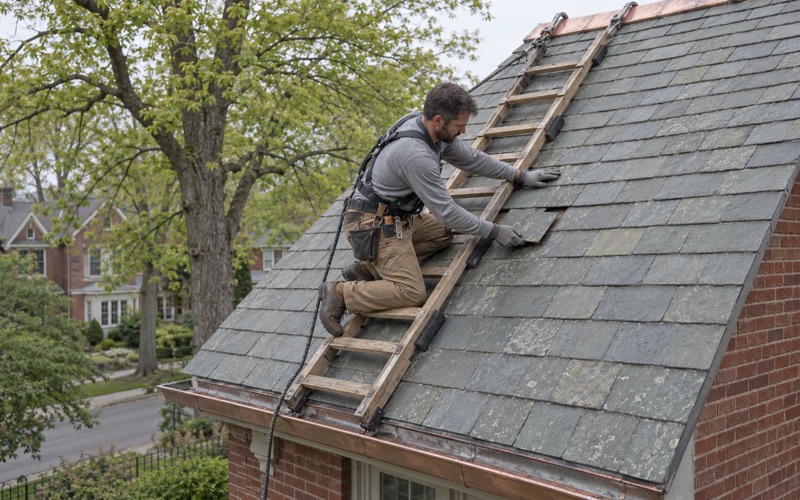
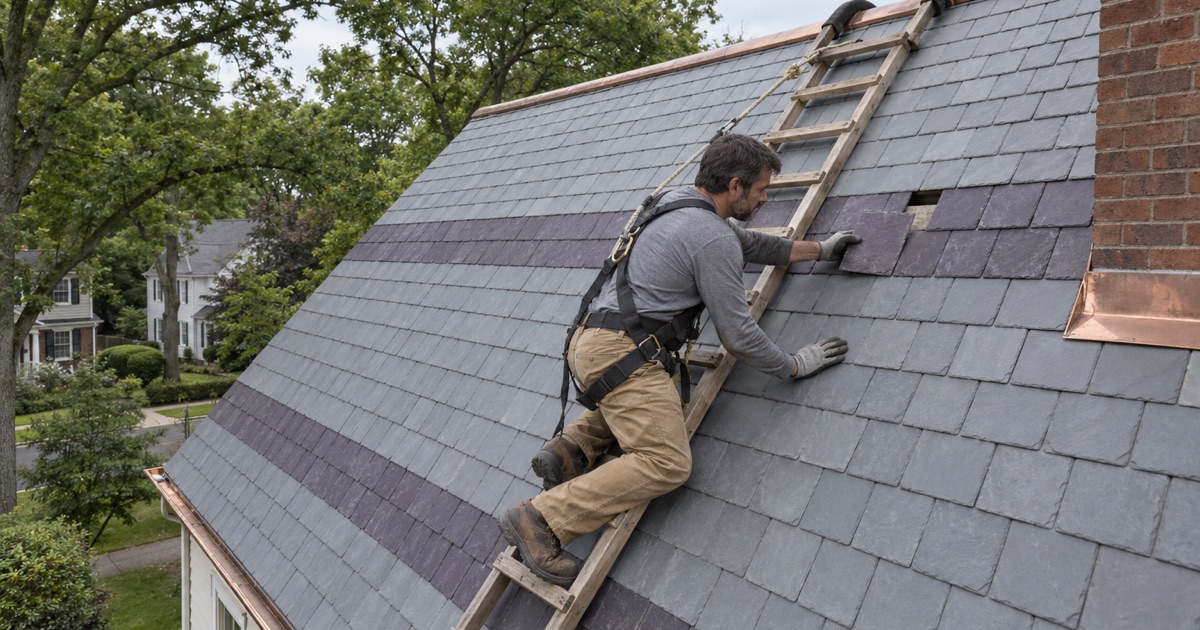
Good slate can outlast several generations of shingles, which is why we do not tear it off by default. When a slate roof is sound overall and has a few cracked, slipped or missing pieces, we repair it with matching slate rather than patching the gaps with asphalt or roof cement.
Matching the stone
Slate varies in color, thickness and texture, and a replacement piece that does not match reads as a patch from the street. We look for a close match in size and tone, often Pennsylvania Black or Buckingham slate depending on what is already up there. Synthetic slate products such as DaVinci are an option for a full replacement, but on a repair we try to keep the roof real slate.
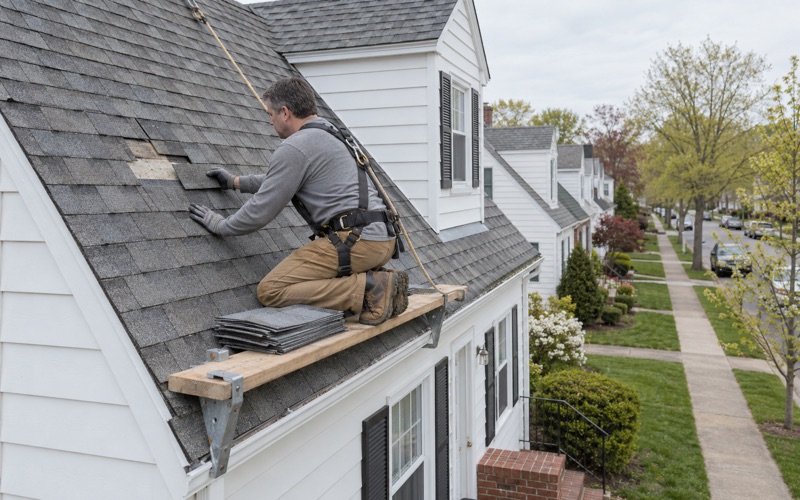
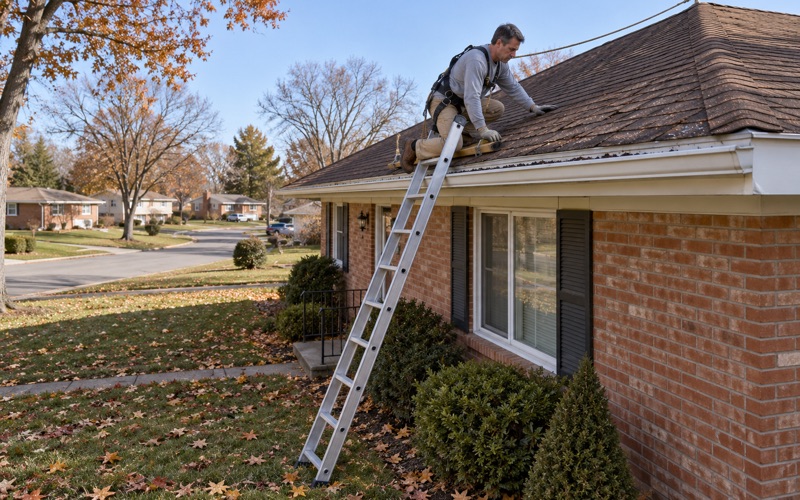
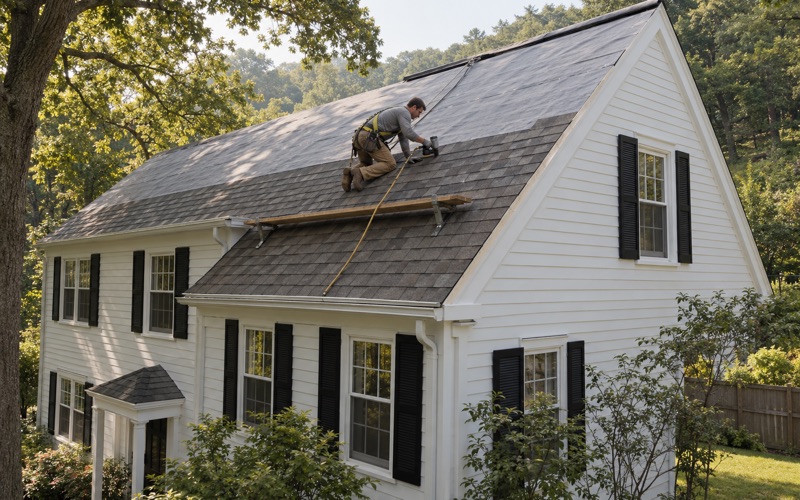
We also walk the roof carefully, because slate breaks under careless feet. Much of the work happens from ladders, hooks and roof brackets so the good pieces around a repair stay intact.
Copper nails, slate hooks and bibs
The fasteners matter as much as the stone. Old slate roofs often fail not because the slate wears out but because the original nails rust through and pieces slide. We set replacements with copper nails or slate hooks, and we use copper bibs where a nail head would otherwise be exposed to water.
That approach follows the thinking in the National Park Service Preservation Brief 29 on slate roofs: keep sound slate, repair it in kind, and replace only what has actually failed. It is slower than stripping the roof, and on the right house it costs far less over the life of the building.
When slate cannot stay
Sometimes a slate roof is past saving, with widespread delamination or a failing deck underneath. When that is the case, we explain why before we give you a number. Slate is also one of the coverings New Jersey’s rehabilitation subcode will not let you overlay, along with tile, wood shake and any roof that already has two layers, so a replacement means a full tear-off. You hear that reasoning from us first, not as a surprise on the estimate.
Rebuilding a Chimney Before It Is Flashed
The station restoration rebuilt its chimney in historically accurate brick as part of the roof work, not as an afterthought. Chimneys are where many older roofs in the borough leak, and flashing new metal against crumbling masonry only buys a few seasons.
Why the masonry comes first
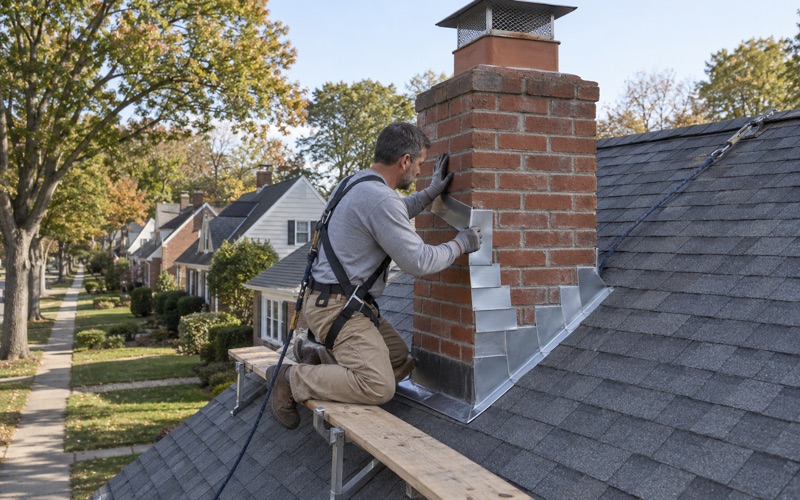
Flashing works by tucking metal into the brick joints and lapping it over the shingles or slate. If the mortar is soft, the bricks are spalling or the crown is cracked, water gets behind the metal no matter how well it is bent. When we find a chimney in that shape, we tell you the masonry has to be addressed before new flashing goes on, so you are not paying twice.
On a leak call, the attic often tells the story. Wet framing or stained sheathing around the chimney chase points to the masonry or the flashing, and we trace it there before we price anything.
New flashing, never reused
On a replacement we install new step flashing along the chimney sides and new counter flashing set into a reglet cut into the brick, along with apron flashing at the front. We do not reuse old flashing under new shingles; old metal that has been bent, sealed and resealed is usually where the next leak starts. On a wide chimney we build a cricket, or saddle, on the uphill side so water and debris are steered around it instead of pooling against the brick.
Lead-coated copper on older houses
On slate and on older masonry, we often use lead-coated copper flashing, which lasts and weathers in a way that suits a period house. On a standard asphalt roof, painted aluminum or steel is typical. Either way, the material is listed on its own line in your scope so you know what you are paying for.
1950s Waldwick Houses on Their Second or Third Roof
The typical Waldwick roof sits on a 1950s house. Census estimates put 41.7 percent of the borough’s homes in that one decade, with more from the 1940s and earlier, so roughly two in three homes predate 1960. A house that age has very likely been re-covered more than once, and a tear-off is usually the first time anyone sees the original deck in decades.
What we find under the old layers
When we strip an older roof, we often uncover board sheathing, previous repairs and soft spots that were invisible from the attic. Any damaged decking we find is photographed and shown to you before it is replaced, at a per-sheet price already written into the contract. The number cannot creep upward once the old roof is off.
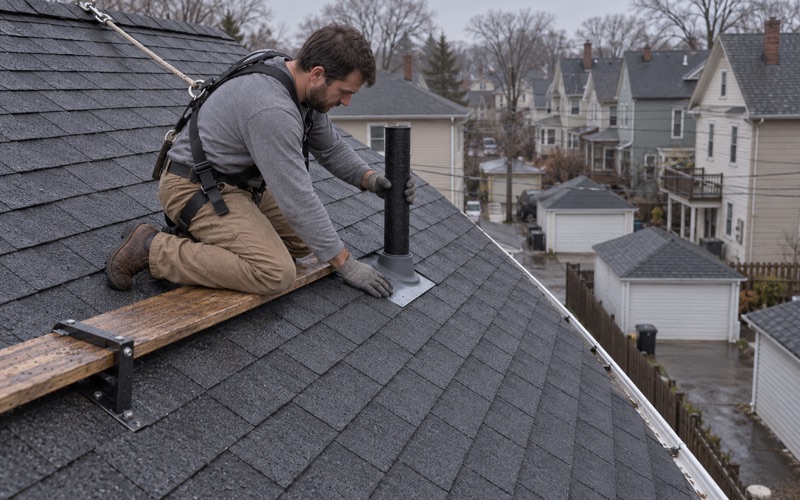
The new system goes down in order: drip edge at the eaves and rakes, ASTM D1970 self-adhering ice and water barrier at the eaves, valleys and around penetrations, synthetic underlayment over the field, then a starter strip and architectural shingles such as GAF Timberline HDZ, Owens Corning Duration or CertainTeed Landmark, finished with hip and ridge cap. New pipe boots replace the old ones rather than being caulked again.
Ventilation on a mid-century attic
Many houses from this era were built with little attic ventilation, or have had soffits covered over in later renovations. On every replacement we check intake at the soffit against exhaust at the ridge and balance the two, because a hot, damp attic shortens shingle life and feeds condensation that can look like a leak.
Where a ridge vent makes sense, we pair it with enough soffit intake to match its net free area. We would rather explain a ventilation change in the scope than leave an attic that cooks the new roof.
Permits, paperwork and the day of the job
New Jersey treats replacing the roof covering on a detached one- or two-family house as ordinary maintenance under N.J.A.C. 5:23-2.7, which does not call for a construction permit. The Waldwick Building Department at 63 Franklin Turnpike publishes its own guidance on roofing work, so on a larger or more involved job we suggest a quick call to the office at (201) 652-5300 to confirm how the borough views it. Our contracts follow New Jersey’s home improvement rules, including the three-day cancellation notice.
Most houses in Waldwick are owner-occupied single-family homes, but on a two-family house we plan around both floors so the upstairs tenant knows when the crew arrives and where we need access. If storm damage is behind the call, we photograph it and write it up for your own claim, and we will meet your adjuster on site when you ask. At the end of every work day the yard, driveway and gutters are cleaned, including a magnet sweep for nails, so the property is usable each evening rather than only at the finish.
- 20+ Years on North Jersey Roofs
- Itemized Written Scopes
- Attic-to-Ridge Leak Tracing