Clifton Elite Roofing brings more than 20 years of roofing in Westwood and across northern New Jersey to storefronts, mixed-use buildings, apartment houses and single-family homes. What sets a job here apart is less the roof itself than the paperwork and timing around it, and we sort that out before anyone climbs a ladder. Our first visit answers one question honestly: can this roof be repaired, or does it really need replacing?
When there is a leak, we look in the attic or the ceiling space as well as on the roof, because water often travels along a rafter or a deck seam before it shows up on a ceiling. Finding where it actually gets in comes before any price. Then you get a written scope that breaks out tear-off, decking, underlayment, flashing and ventilation as separate lines, so a second estimate can be laid beside ours and compared item by item.
Storefront and Mixed-Use Roofs Along Westwood Avenue and Broadway
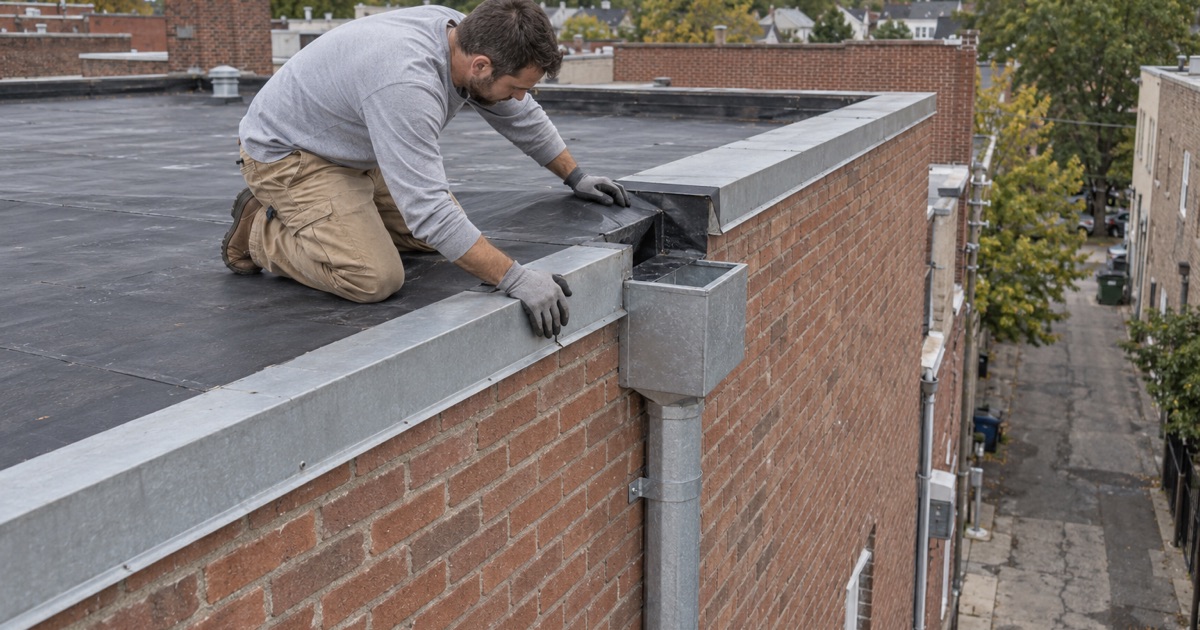
Westwood’s Central Business District runs along Westwood Avenue and Broadway, and that is where most of the borough’s commercial roofs sit. Many of these buildings put shops on the ground floor and apartments or offices above, which means a roof problem reaches a business owner, a landlord and the people living upstairs at the same time. We plan these jobs with all three in mind.
What we usually find on a downtown roof
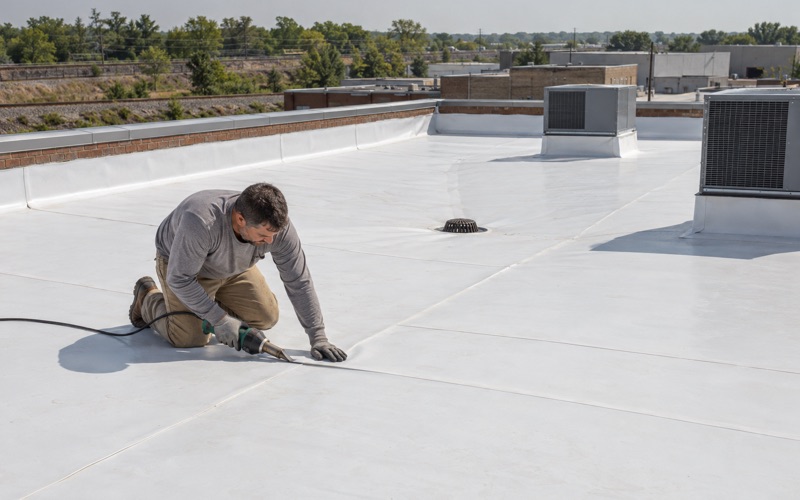
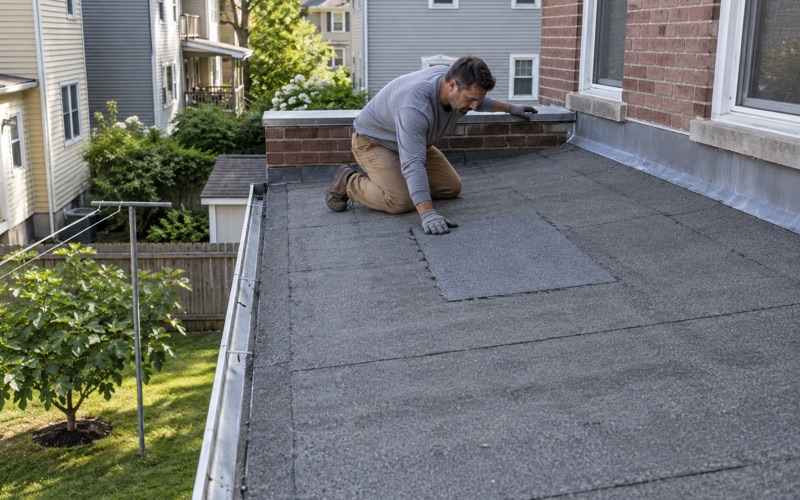
Low-slope and flat roofs are common on storefront blocks, and they call for different materials than a pitched house roof. Depending on the building, that can mean an EPDM rubber membrane, a TPO or PVC single-ply membrane, or SBS or APP modified bitumen. Each has its own seam method, its own flashing details at parapets and rooftop units, and its own way of failing as it ages.
The trouble spots tend to be the edges and penetrations rather than the open field of the roof. Parapet walls, scuppers, drains, vent stacks and equipment curbs are where we start looking, and we follow any staining inside to confirm the path before recommending anything.
Keeping the shop open while we work
A storefront that closes for a roofing job loses a day of business, so we talk through staging, material deliveries and debris removal with the owner before the start date. Where the street side is tight, we plan where the dumpster and hoist can go rather than discovering it on the first morning. At the end of every work day, the sidewalk, driveway or rear lot and the gutters are cleaned, including a magnet sweep for roofing nails.
For a mixed-use building, the written scope also notes which areas inside or behind the building we need to reach. Tenants above a shop should not have to guess when the crew will be on the roof over their heads.
Looking for roofing closer to Tenafly? See Tenafly Roofing.
What the Borough’s Permit Sheet Says About Roofing
Westwood’s Construction and Building Department publishes a one-page summary titled “When and Why Do I Need a Building Permit or Zoning Approval?”, revised April 15, 2026. Under work that needs a building permit, it lists “Roofing - commercial only.” That short line is the borough’s own statement, and it is the one that matters for every storefront and commercial roof in town.
Commercial roofs and the construction office
The department operates as the borough’s Uniform Construction Code enforcing agency, with Armand Marini named on the sheet as Construction Official. For a commercial roof, we build the permit into the schedule from the start, along with the inspection that follows. The sheet lists building inspections Monday through Friday from 8:00 a.m. to 12:00 p.m., so we plan the stages of a commercial job around a morning inspection rather than leaving the deck exposed while we wait.
The sheet is a summary, and the state Uniform Construction Code is the controlling text. When a specific job raises a question, such as structural repairs or rooftop equipment changes, we point the owner to the construction office for a direct answer instead of guessing on the borough’s behalf.
Houses follow a different line
New Jersey treats replacing the roof covering on a detached one- or two-family house as ordinary maintenance under N.J.A.C. 5:23-2.7. Westwood’s sheet carries its own residential entries alongside that state rule, so before a house job we check the current sheet against the work we plan to do. Whatever applies, you hear about it before the contract is signed, not after the shingles arrive.
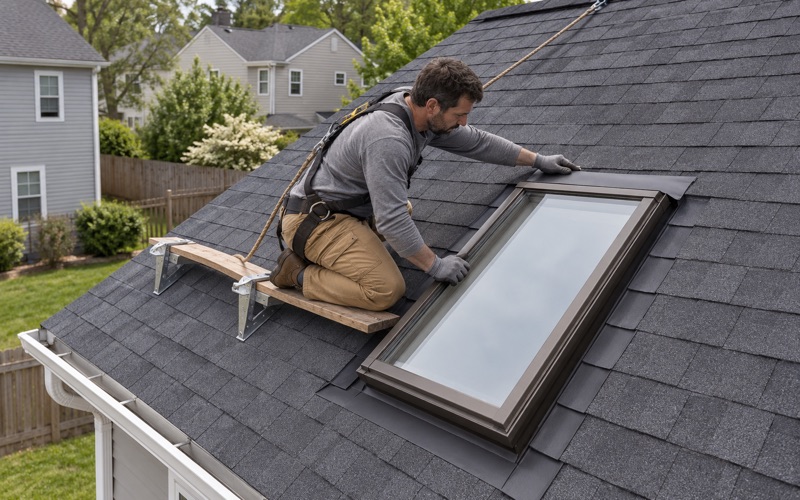
The state rehabilitation subcode also limits overlays. A roof that already has two or more layers, or one with slate, wood shake or tile underneath, gets torn off rather than covered. If an overlay is off the table for your roof, we explain why before we hand you a number.
Work hours, the placard and our start times
The same sheet states plainly that no work is to begin before 7:00 AM or continue after sunset. Our crews start no earlier than 7:00 a.m. in Westwood and pack up before dark, which in late fall and winter means a shorter working day. We set the schedule with that in mind so a job is not left half open at dusk.
Where a permit is issued, the borough requires the placard to be displayed in the front window. On a storefront that usually means the shop window, and we arrange that with the owner when the permit is picked up.
Landmarks, the Historic Preservation Commission and a Certificate of Appropriateness
Westwood created a Historic Preservation Commission by Ordinance No. 08-08 in March 2008. Locally designated properties go through the commission before significant exterior changes. Some of downtown is now part of that picture, though it is a matter of individual landmarks rather than a downtown historic district.
The Westwood Trust building at 1 Westwood Avenue
The four-story Westwood Trust building, an Art Moderne former bank with neo-Classical detailing, was designated a local landmark in early 2026. According to the Pascack Press account, exterior alterations there need commission review, including a Certificate of Appropriateness, before permits are issued, while interior features are not regulated. A roofing job on a building like this can therefore involve two offices: the commission and the construction department.
The press account names exterior alterations, and it does not set out a list of required roofing materials. Whether a particular roof project falls within the review is a question for the commission, and we would rather the owner hear that from the commission than from us. What we can do is build the time for that review into the project so it does not collide with the permit.
Houses in the Jefferson Avenue Historic District
Designation in Westwood is not only downtown. The Jefferson Avenue Historic District holds six designated properties, including the Samuel P. Cole House at 84 Washington Avenue, a 19th-century Second Empire house designated in October 2024. Owners of designated houses seek commission review before significant exterior changes, so we ask about designation on the first visit.
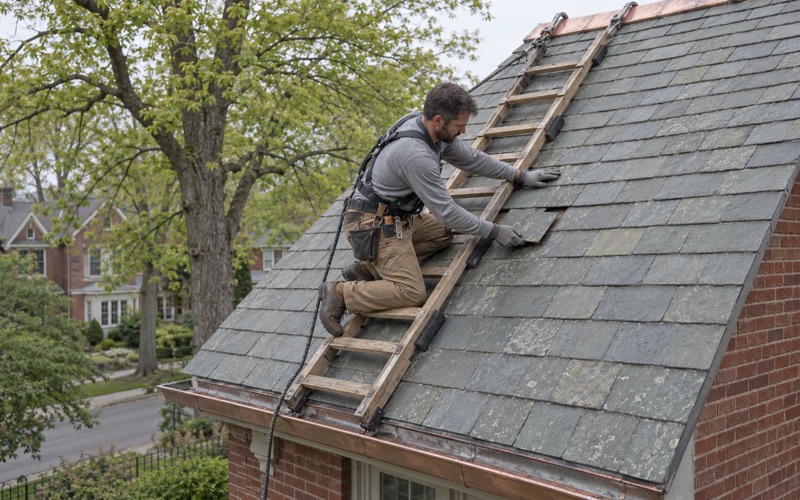
Houses of that age often carry slate or other original materials worth keeping. Where slate is still sound, we repair it with matching slate, copper nails and slate hooks rather than tearing off the whole roof by default.
How we prepare a landmark estimate
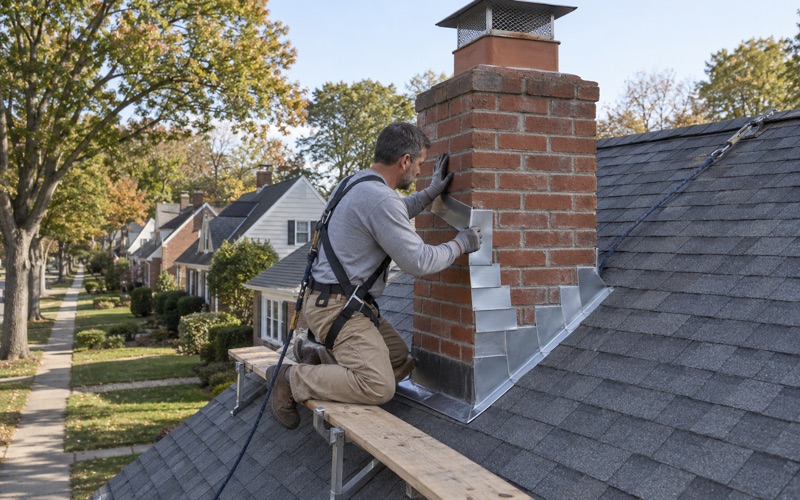
For a designated building, our written scope describes the existing roof, the visible materials at the edges and flashings, and exactly what we propose to change. That gives the owner a clear document to bring to the commission. Step, counter and chimney flashing are replaced with the roof instead of being reused under new material, and we note that in the scope so nothing about the exterior detail comes as a surprise to anyone reviewing it.
Apartments, Two-Family Houses and Prewar Roofs
Westwood mixes downtown multifamily buildings with streets of single-family houses. The American Community Survey’s 2024 five-year figures put renters at 37.1 percent of occupied units, and the borough counts 410 units in buildings of 50 or more, 346 in two-unit buildings and 275 in buildings of three or four units, alongside 2,693 detached houses. A roofer working here sees everything from a small cape to a larger apartment roof.
Two-family houses with a tenant upstairs
On a two-family house, the tenant on the top floor feels a roofing job more than anyone. We schedule with both floors in mind, so the upstairs household knows what day the crew arrives, roughly how long it will take and where we need access, such as an attic hatch inside their unit. That small step keeps a landlord from fielding calls all week.
The same planning applies to a three- or four-unit building. One contact person, one schedule and a clear access plan make the job quieter for everyone living there.
Roofs on prewar houses
The ACS counts 1,159 units in Westwood, or 27.6 percent, built in 1939 or earlier. Older houses often have plank decking, layered roofs and chimneys that have been patched more than once. When the old roof comes off, any damaged decking we find is photographed and shown to you before it is replaced, at a per-sheet price already written into the contract.
Painted trim and fascia on houses built before 1978 fall under the EPA lead-safe rule when they are disturbed, so we plan for that when the job touches the eaves. We also check ventilation on every replacement, balancing intake at the soffit against exhaust at the ridge, because many older attics were never vented to match a modern roof.
Storms, solar panels and the contract
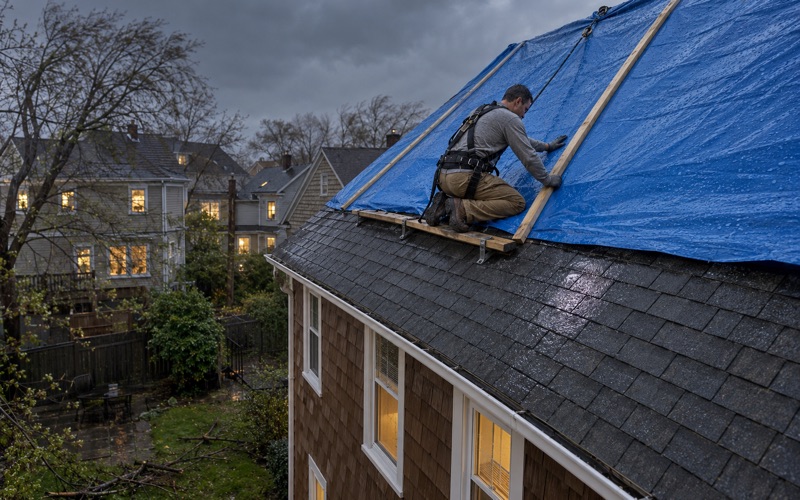
After a storm, we photograph and write up the damage for your own insurance claim, and we will meet the adjuster on site if you ask. If your roof carries solar panels, the removal and reinstall go into the schedule from the beginning. Every contract follows New Jersey’s home improvement rules, including the three-business-day cancellation notice on contracts over $500.
- 20+ Years on North Jersey Roofs
- Itemized Written Scopes
- Attic-to-Ridge Leak Tracing